Current reading edition
English translation
Square brackets mark uncertain words or editorial explanations. Songs are translated for meaning; their speakers are not necessarily the writer.
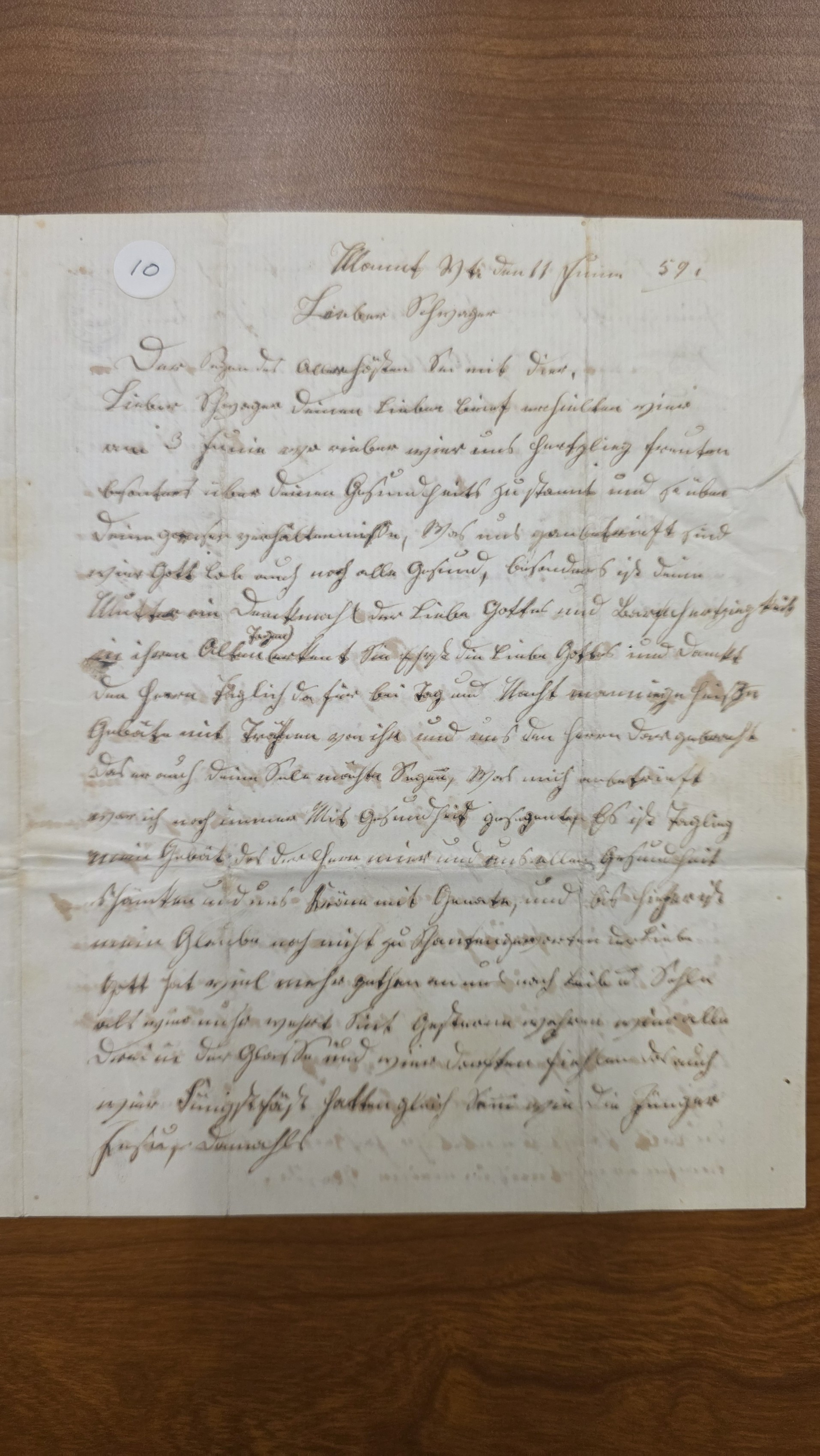
Download the English text ↓Page 1
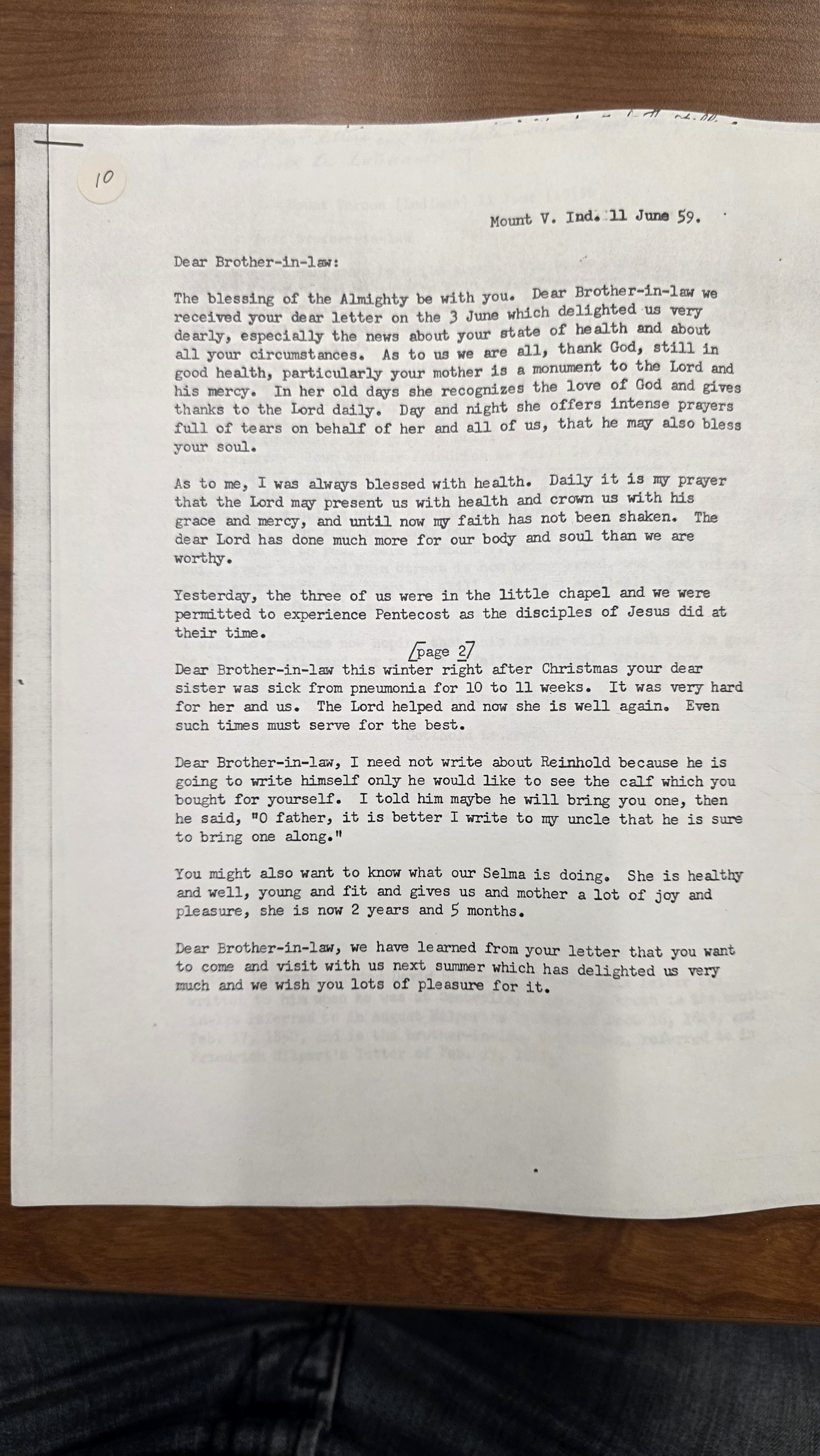
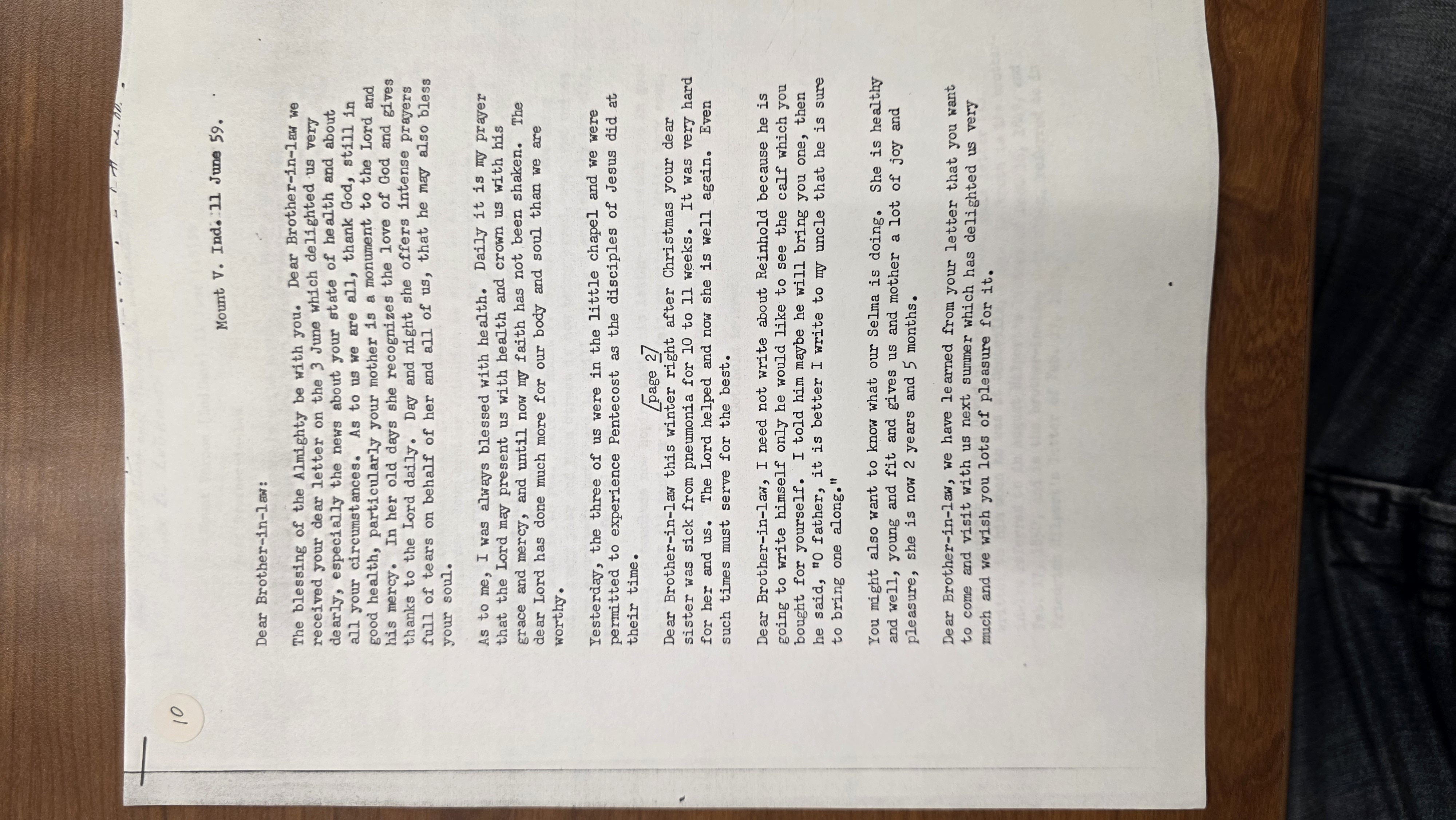
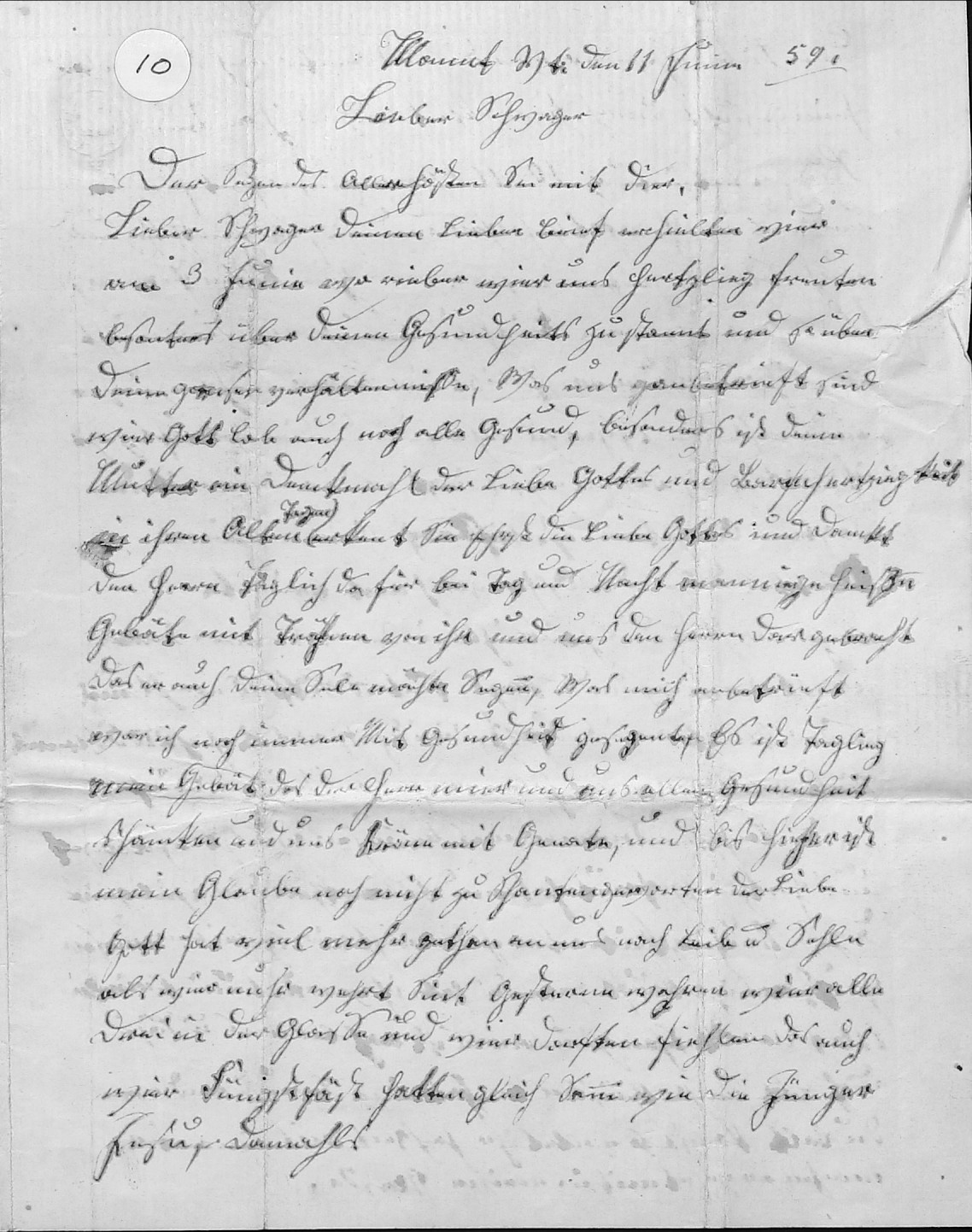
Mount Vernon, June 11, 1859
Dear brother-in-law,
May the blessing of the Most High be with you.
Dear brother-in-law, we received your dear letter on June 3 and were heartily pleased, especially about the state of your health and your circumstances generally.
As for us, thank God, we are all still well. Your mother in particular is a testimony to God's love and mercy in her old age. She [praises/loves] the dear God and thanks the Lord daily. By day and night [she offers] fervent prayers with tears [for you], and asks the Lord that he might also [open the eyes of] your soul. [The exact verb in the final request is uncertain.]
As for me, I am still blessed with health. It is my daily prayer that the Lord may grant me and all of us health and crown us with grace. Up to now [he has not allowed] my faith to be put to shame, for the dear God has done so much for us, in body and soul.
[The next sentence is not securely deciphered. It appears to refer to a shared religious experience involving "all three," but its event and wording remain unresolved.]
[The final lines refer to celebrating Pentecost and compare the gathering with Jesus's disciples long ago; some connecting words are unclear.]
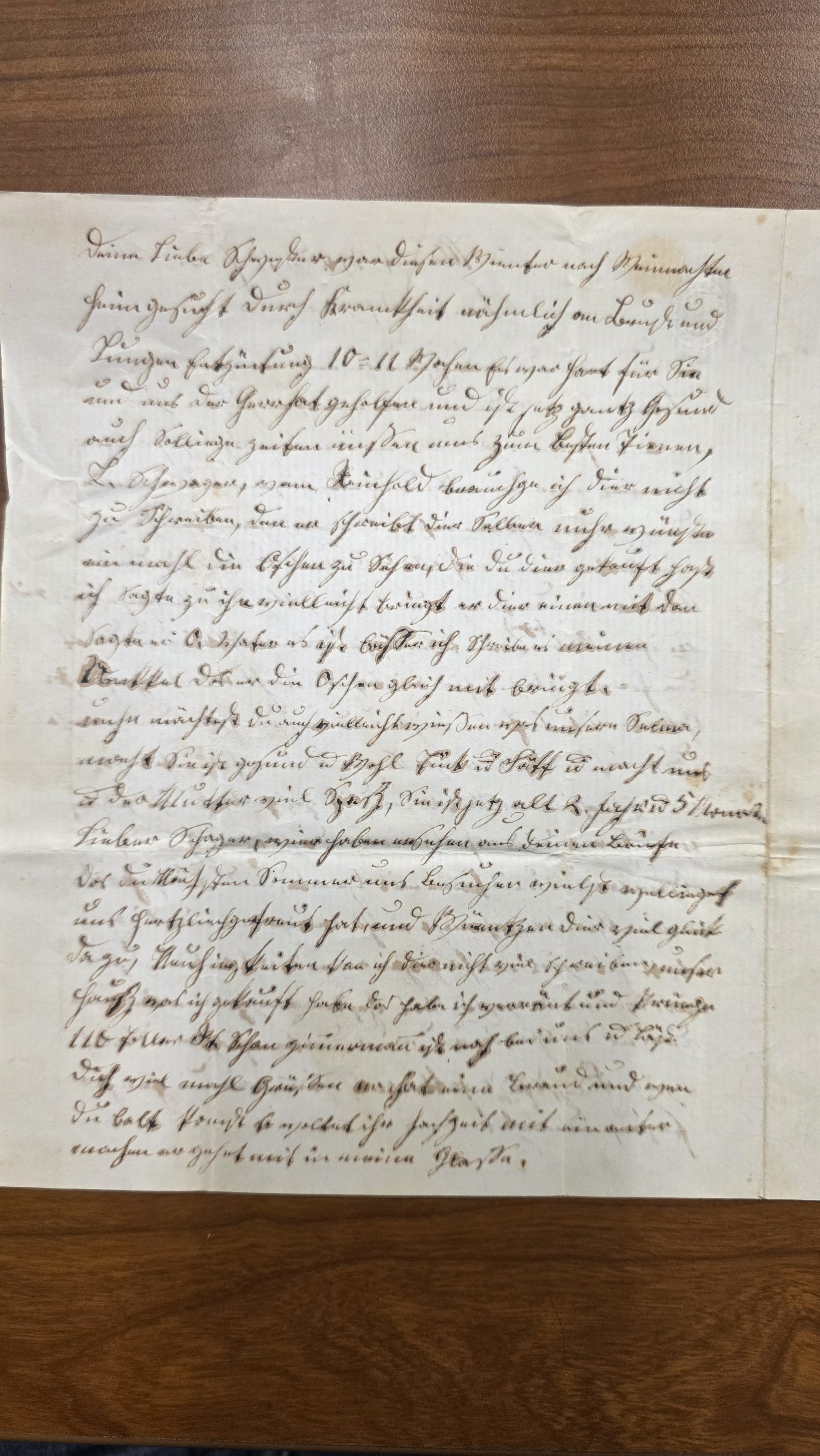
Page 2
Your dear sister was afflicted with illness this winter, after Christmas: namely, inflammation of the chest and lungs, for ten to eleven weeks. It was hard for her and for us. God has helped her, and she is now quite well again and [has regained her former strength — wording provisional]. [Thanks] to the dear Lord.
Dear brother-in-law, I need not write to you about Reinhold, because he writes to you himself. He would like to see the oxen you have bought. I said to him, "Perhaps he will bring you one." Then he said, "Oh, [Father?], it would be better if I wrote to my uncle that he should bring the oxen along."
You may also wish to know something about our Selma. She is healthy and well, [lively and cheerful — descriptive words uncertain], and gives us and her mother much pleasure. She is now two years and five months old.
Dear brother-in-law, we learned from your letter that you intend to visit us next summer. This pleased us greatly, and we wish you much good fortune with it.
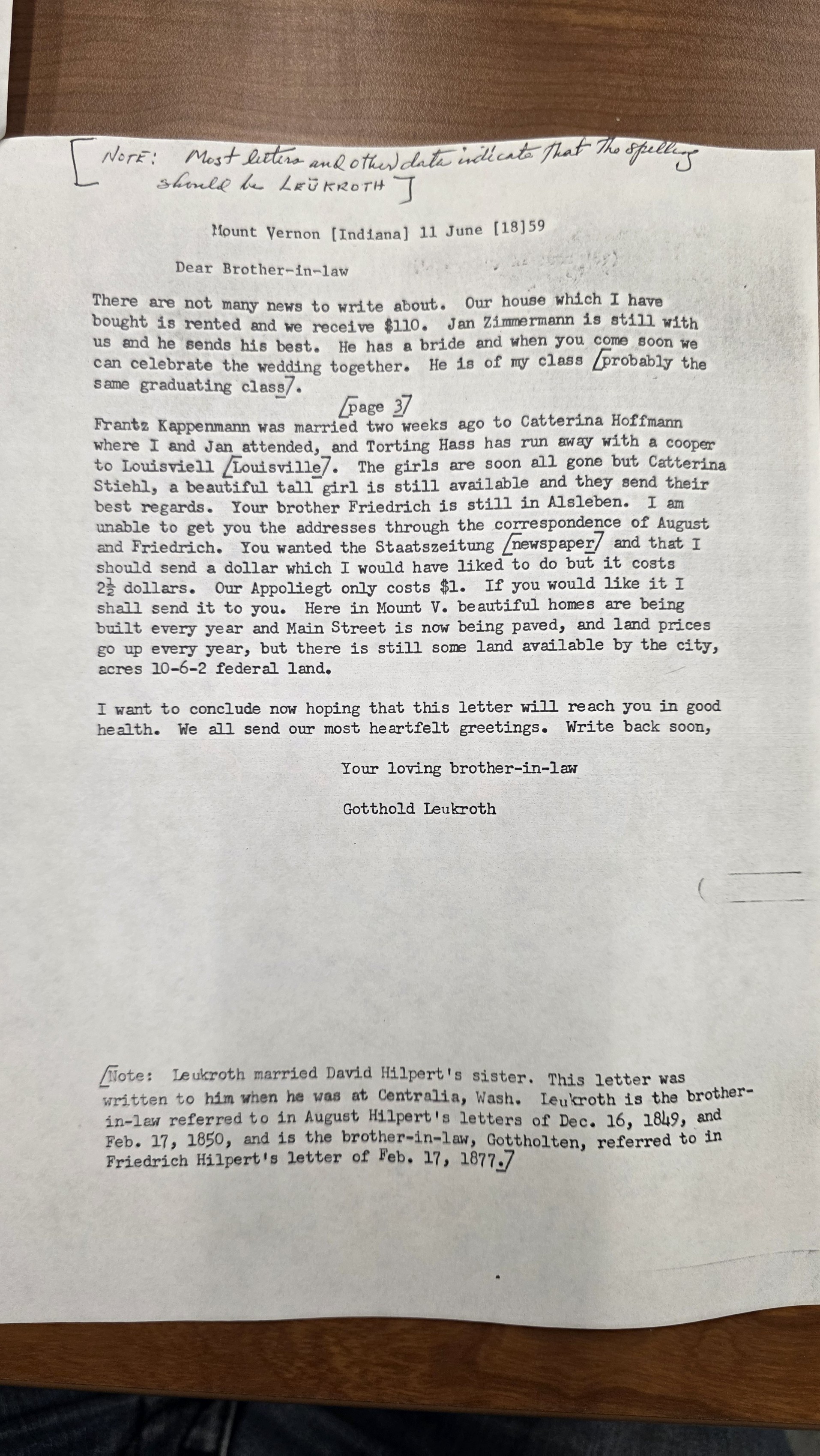
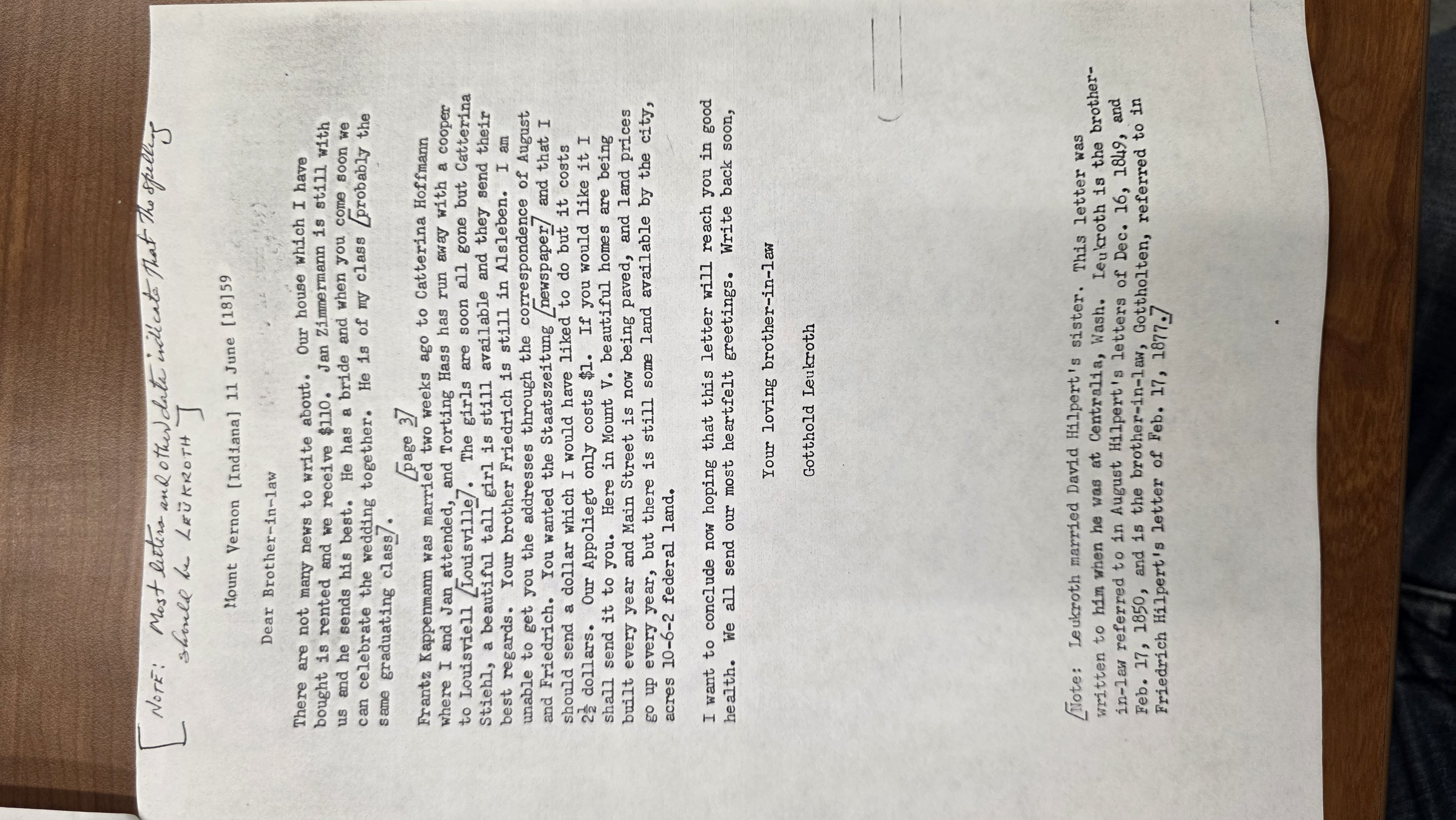
I cannot write much to you about business. The house I bought I have [rented out?] to a friend, [for] 110 dollars. [The transaction verb is provisional and the payment period is not stated.]
[Johann/Jan] Zimmermann is still with us and sends you many greetings. [He has a bride; the passage concerns a possible wedding when you visit. Some connecting words remain uncertain.]
Page 3
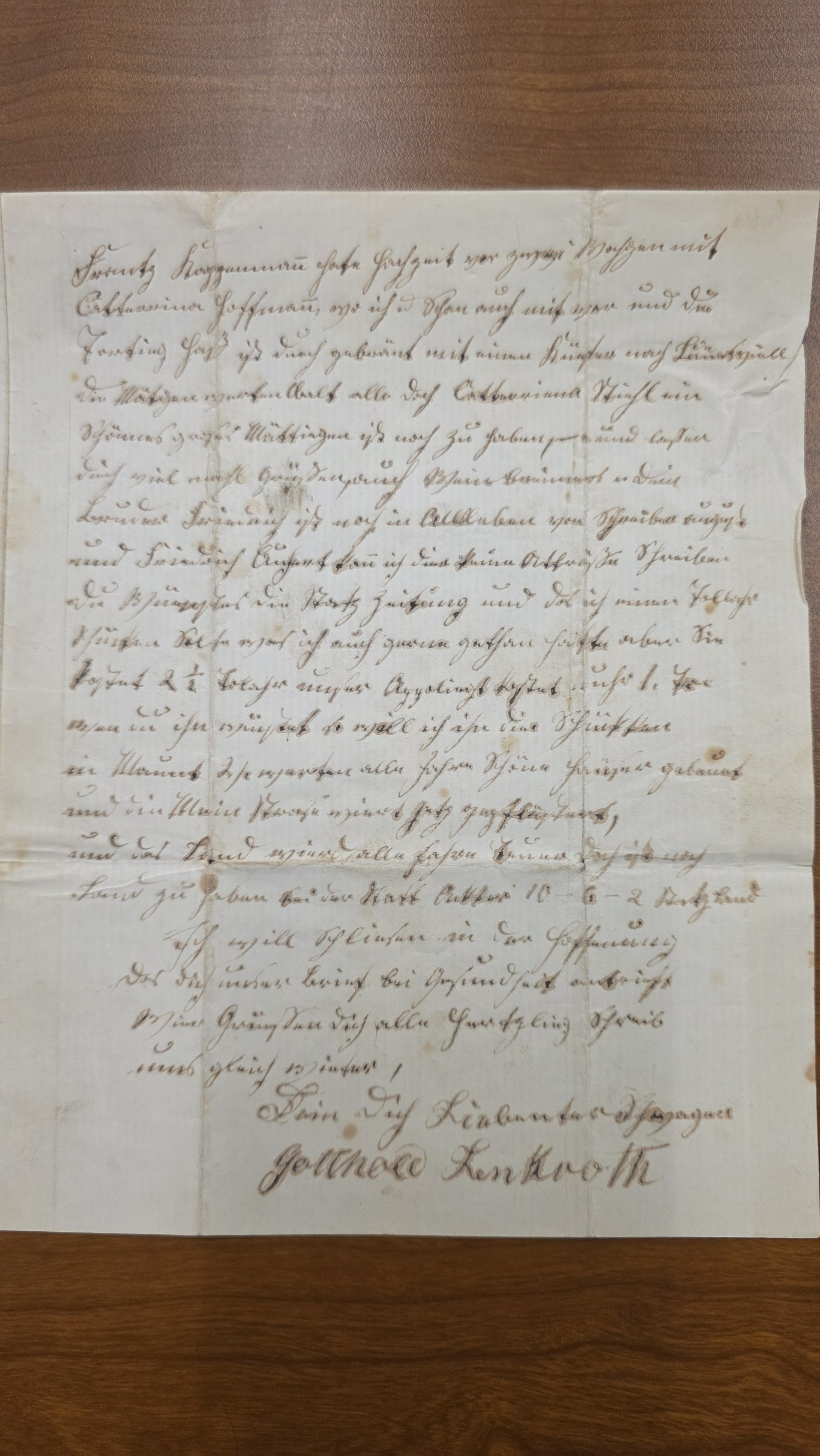
Franz [Kappemann/Kappenmann?] had his wedding two weeks ago to Catharina Hoffmann. I and [another person, possibly my son] were there too.
[Name uncertain] has run away with [a cooper, according to the historical translation] to [Louisville?].
The girls are all getting married. Catharina [Stiehl?], a fine, tall young woman, is still available and sends you many greetings. [Another greeting includes names not securely deciphered.] Friedrich is still in Alsleben. [The following wording about letters and addresses, including August, remains uncertain.]
You mention the Staats-Zeitung [newspaper]. [The following phrase concerns a wish to read it, but is not completely deciphered.] It costs 2½ dollars, whereas the [Apologet?] costs only 1 [dollar a year?]. If you want it, I will send it to you. [The subscription period and the exact identity of the paper need confirmation.]
In Mount Vernon [many/each year — wording uncertain] fine houses are being built, and Main Street is now being paved. [A further sentence concerns land still available near the town; the figures appear as "10 - 6 - 2," but their units and meaning are unresolved.]
I will close in the hope that our letter finds you in good health. We all send you heartfelt greetings. Write back to us at once!
Your loving brother-in-law,
[Gotthold Leukroth; also recorded as Lenkroth]