Eileen’s story
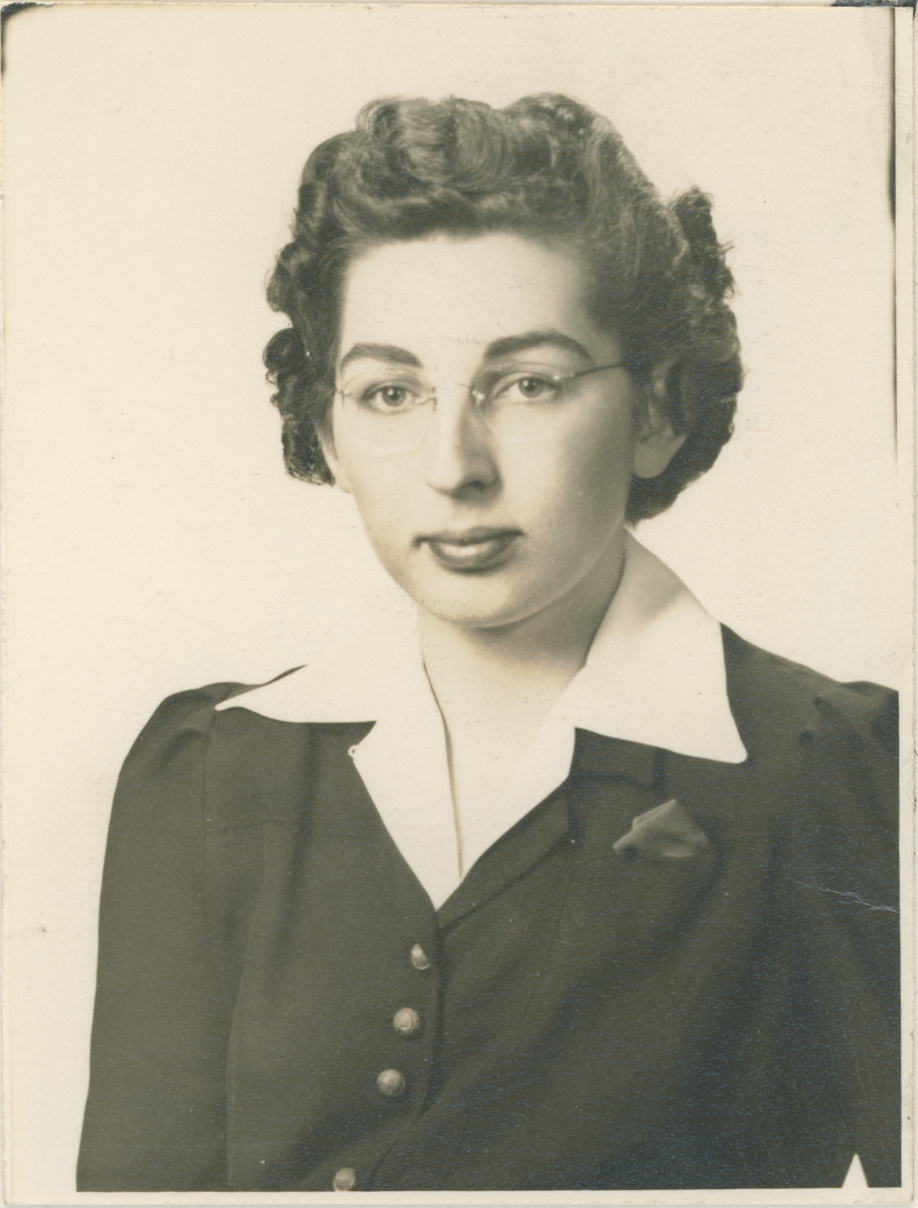
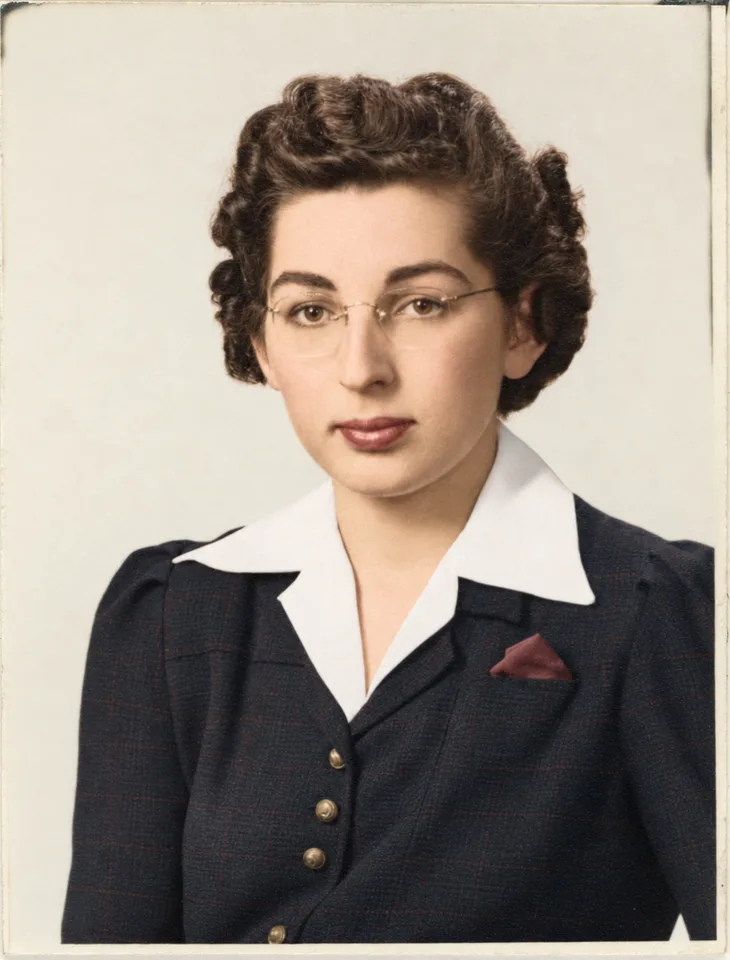
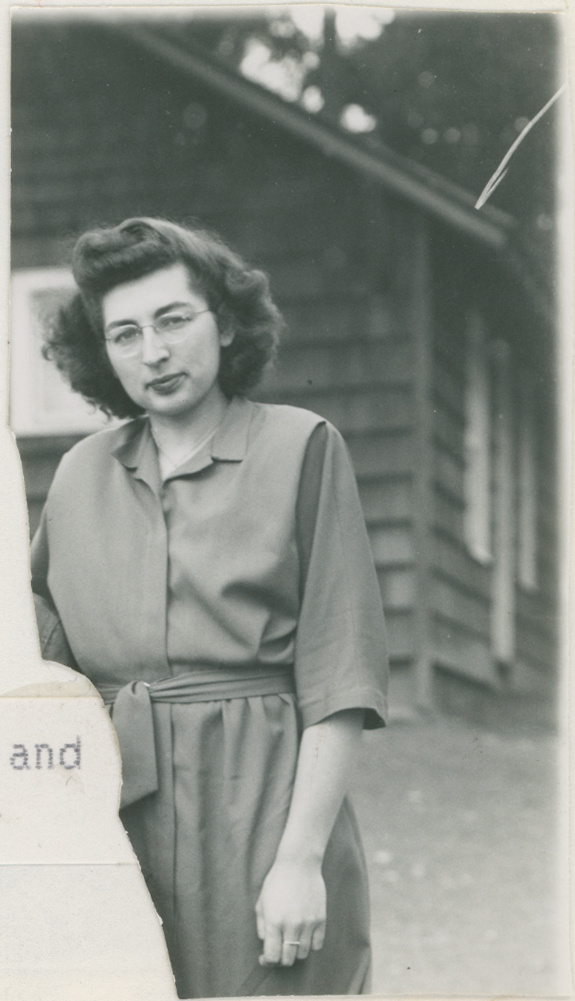
Much of what we know about the Hilpert family comes to us through Eileen. She saved the letters, named the faces in the photographs, and wrote down the stories that might otherwise have gone with the people who remembered them. But before she became the mother and grandmother who put those albums together, she was a little girl on the family farm, a young teacher with friends scattered far from home, and a traveler who set off to see Europe by bicycle.
A childhood on the Hilpert farm
Eileen Marie Hilpert arrived on November 11, 1923, in Bucoda, Washington, the only child of Otto and Milly Hilpert. Her father was forty-two and her mother thirty-three. Home was the Hilpert farm along the Skookumchuck River, where her father’s family had put down roots long before she was born.
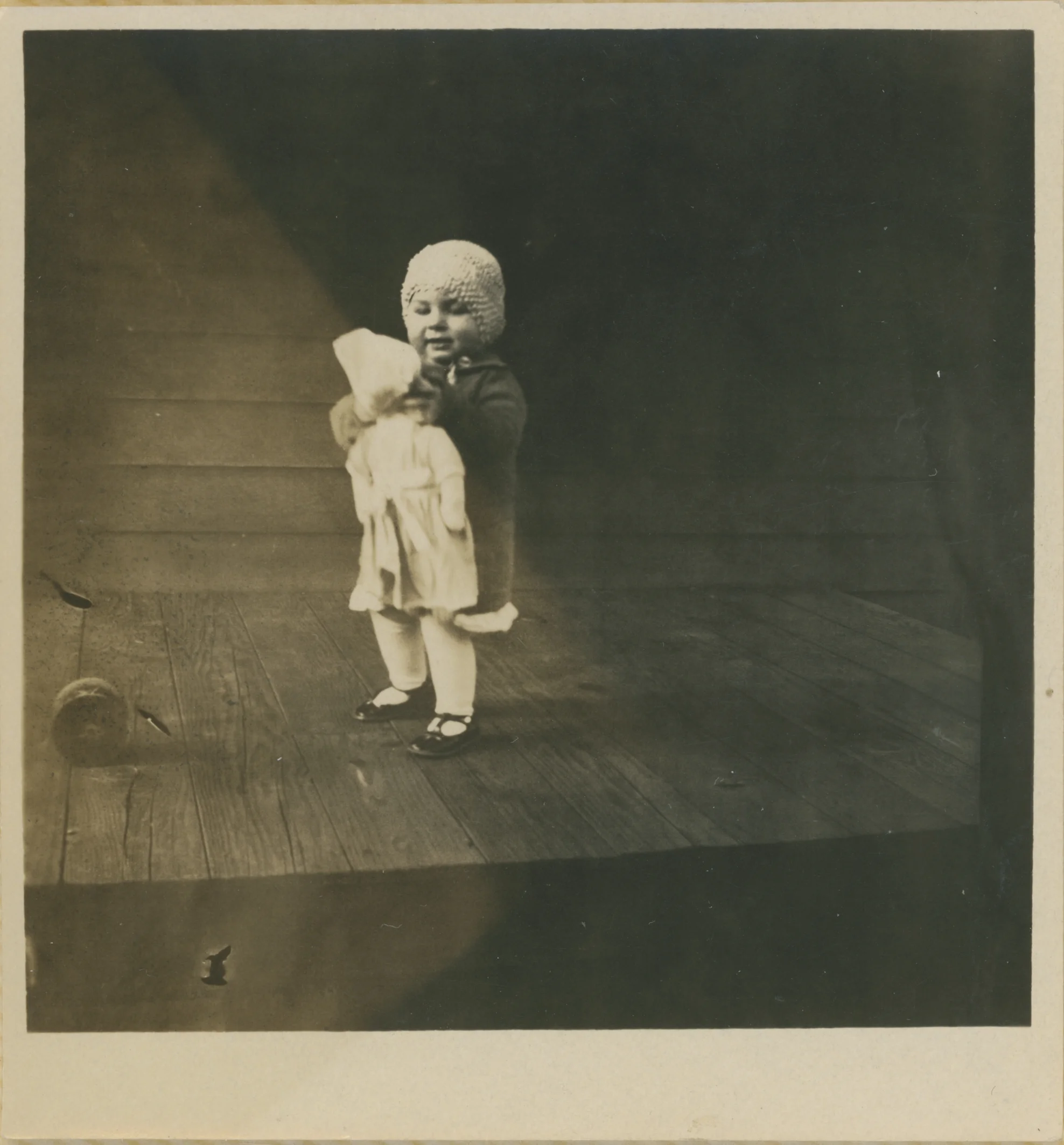
The photographs bring that childhood close. There is Eileen with her doll Gretchen, a gift from Aunt Annie, wearing a bonnet from Mrs. Schaefer and a sweater her mother made. There are Christmas pictures with her dog Ring, and later pictures of fishing, cows, bicycles, and the horse Shorty. Her cousins Dorothy and Valetta appear beside her. Eileen had no brothers or sisters, but aunts, uncles, cousins, and grandparents belonged to the world around her.
Her mother’s parents, Peter Dortzbach and Ida Falkenrath, eventually made their home with the family. A porch photograph from February 1929 gathers Peter, Ida, Eileen, and Otto together. Eileen remembered Grandma’s cooking and Grandpa’s shoe repairs—ordinary parts of the household that later helped her tell her children what their great-grandparents had been like.
Milly made almost all of Eileen’s clothes, sometimes finding another use for fabric that had already served one purpose. Music belonged in the house too: her mother played the piano and her father the harmonica. In Eileen’s recollections, Otto was soft-spoken, with a dry wit. She remembered his newspaper and the evening radio news as clearly as the larger events of his life.
School days and a wider world
As Eileen grew older, the family album began to include school portraits and trips away from the farm. Her eighth-grade graduation portrait dates from 1936. Three years later, she was a princess at Centralia’s Pioneer Picnic, taking part in a celebration of the community her own family had helped to build.
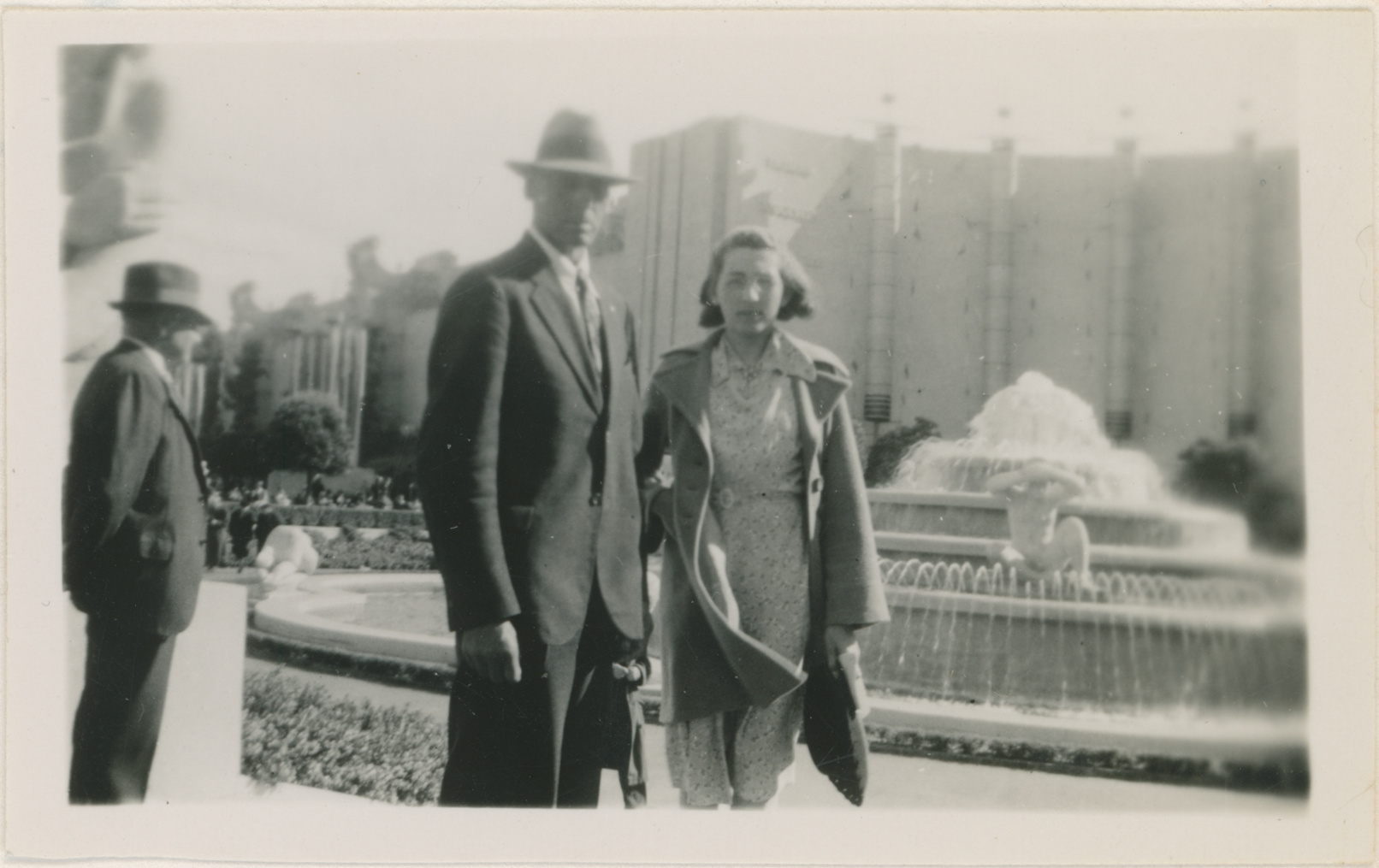
That same summer, in 1939, Eileen and her parents traveled to the fair on Treasure Island in San Francisco Bay. They spent part of the visit with the Honore family. The photographs place the three of them together in a much larger setting than the familiar farm at home.
Eileen graduated from Centralia High School in the spring of 1940, when she was sixteen, and went on to Central Washington College of Education in Ellensburg. College brought both the preparation for teaching and a busy life among other students. The campus newspaper named her on honor rolls, reported her involvement in women’s athletics and social events, and followed her work with the Lutheran Student Association, first as vice-president and then as president.
She kept her ties to home. A Thanksgiving notice in 1941 records her coming back from Ellensburg to stay with Otto and Milly. And even while she was at college, she was working with family photographs: the album notes that she finished and enlarged a portrait of Peter and Ida for their fifty-third wedding anniversary in March 1942.
Letters through the war years
The letters Eileen kept show how many friendships continued while people were separated by school, work, and military service. Envelopes found her in Ellensburg, then in Hoquiam and Seattle. Friends wrote from Army camps and ships, describing training, music, long days, and their hopes of coming home.
Her own side of these exchanges often survives through the replies. Hardy thanked her for a box of cookies in September 1942. Kryl Thorlakson, serving with an Army band, asked for sheet music and writing supplies. Another correspondent thanked her for candy, nuts, tuna, and sardines, while worrying that she might be using ration points she needed herself. These were small, practical ways to keep someone far away connected with home.
Some letters were affectionate, some playful, and some full of ordinary news. Together they give us a glimpse of the young woman her friends knew: a teacher who wrote back, sent packages, shared photographs, and stayed in touch. They also remind us to keep the travelers straight. The overseas places on many of these envelopes were where her correspondents were stationed; Eileen’s own European journey came later.
Becoming Miss Hilpert
In the fall of 1943, Eileen began teaching in Hoquiam. That October she also helped arrange a surprise for her parents’ twenty-fifth wedding anniversary. Milly’s account describes the sandwiches, the cake Eileen made with roses and their names on it, and the silver candles. Eileen selected a swing rocker in Hoquiam to be delivered home as the family’s gift.
By 1945 she was in the Seattle area, and a photograph from May 1947 places her at Rolland School in the Shoreline district. At the end of that school year she accepted a position in Centralia. Superintendent Ray W. Howard’s letter thanking her for her service noted that the move fulfilled her wish to return there, and that the principal and staff had spoken highly of her work.
Back near home, she taught the new Fords Prairie kindergarten, reported with fifty-three pupils in 1947. Later notices place her at Washington School, working with young children and their parents. She explained activities for younger children to Girl Scout trainees and helped demonstrate a model kindergarten day for a mothers’ group.
Her work also took her beyond her own classroom. In 1951 she was elected president of the Centralia Education Association and attended the National Education Association meeting in San Francisco that June. The newspapers often called her Miss Hilpert; generations of pupils would later know her as Mrs. Townsend.
Two wheels and a summer away
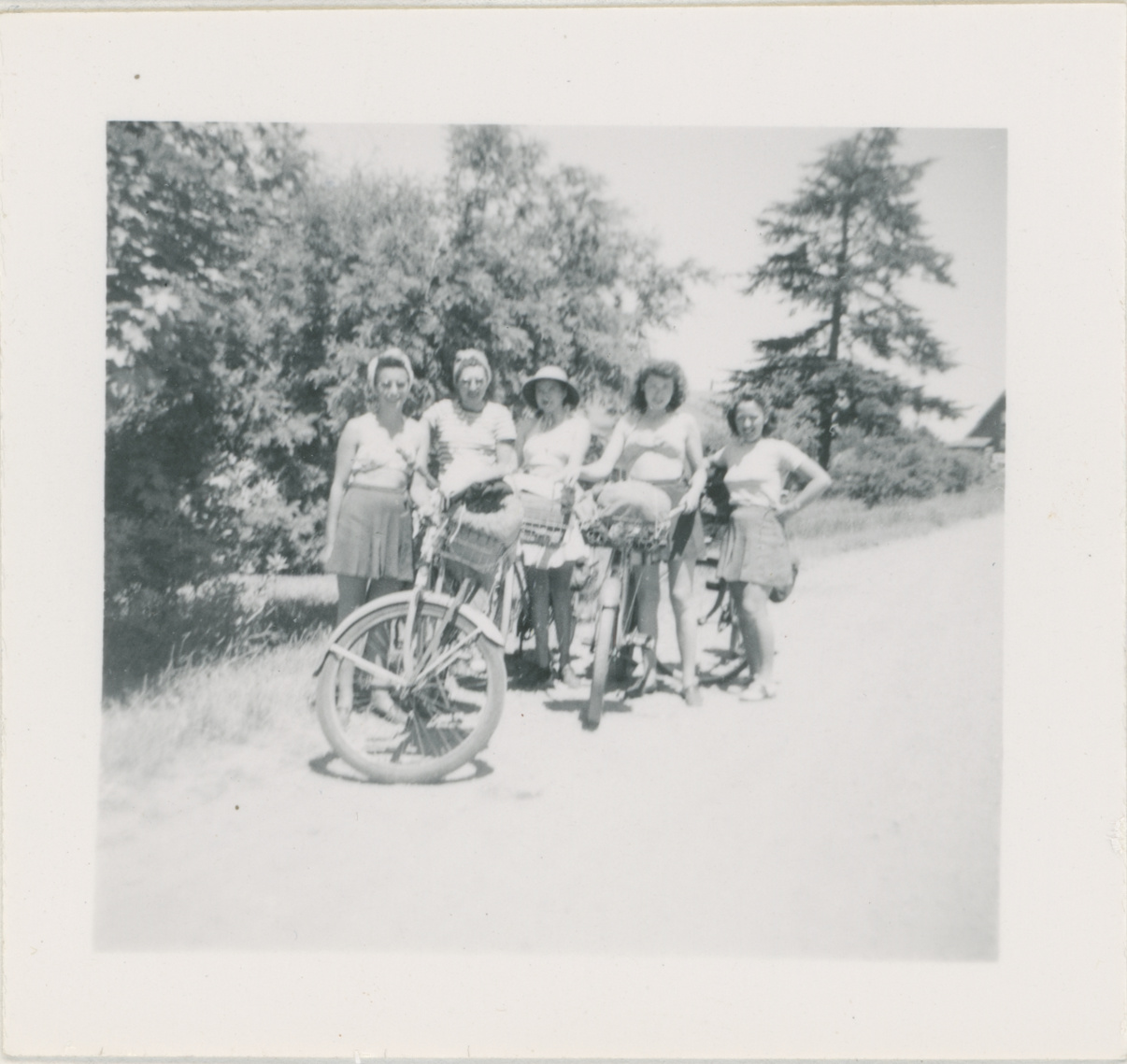
Teaching left room for summer journeys, and Eileen’s bicycle carried her well beyond the roads around home. In 1946 she traveled down the West Coast with four friends—Jo Stroebel, Velma Reden, Yvonne Konerup, and Betty Wall. Her caption identifies their route from Seaside, Oregon, to Huntington Beach, California. The group photograph belongs to that trip, two years before her European adventure.
On June 13, 1948, Eileen left Centralia for a longer summer away. She crossed the country before joining an Adventure Trails group in New York, and on June 29 sailed aboard the Marine Tiger. Her later account recalled checking the packing list repeatedly, buying pedal pushers, and hoping her passport would catch up with her along the way.
With other young Americans, she explored Europe by bicycle and other transport. She described standing-room tickets for The Merchant of Venice at Stratford, punting on the Thames, and visits to London. In the Netherlands she noticed bicycles carrying everything from groceries to family pets. Denmark brought a visit to Kronborg Castle; Sweden brought ten days of cycling and visits to a glass-blowing shop and a school of weaving and textile design.
She shared the journey in a Christmas letter, excerpts of which appeared in the newspaper in January 1949. Back at Fords Prairie kindergarten, she also spoke to the Galvin PTA about her travels. Her passenger record places her return to New York on September 10, 1948. The bicycle trip had been a summer’s adventure, with her teaching life waiting at home.
Eileen and Bud
Among the letters she saved were those from Francis Abbott Townsend, known to family and friends as Frank or Bud. His letters from 1945 and 1946 move easily between affection and everyday life: logging, baseball, music, a school Christmas party, and plans to see one another.
They had worked together on a fair exhibit. When Bud sent her a photograph of it in October 1946, he remembered how much work she had put into making it a success. In an earlier letter, the pictures had reminded him of the time they spent building it together. Those small recollections tell us something that a wedding date alone cannot: their shared story was already taking shape years before they married.
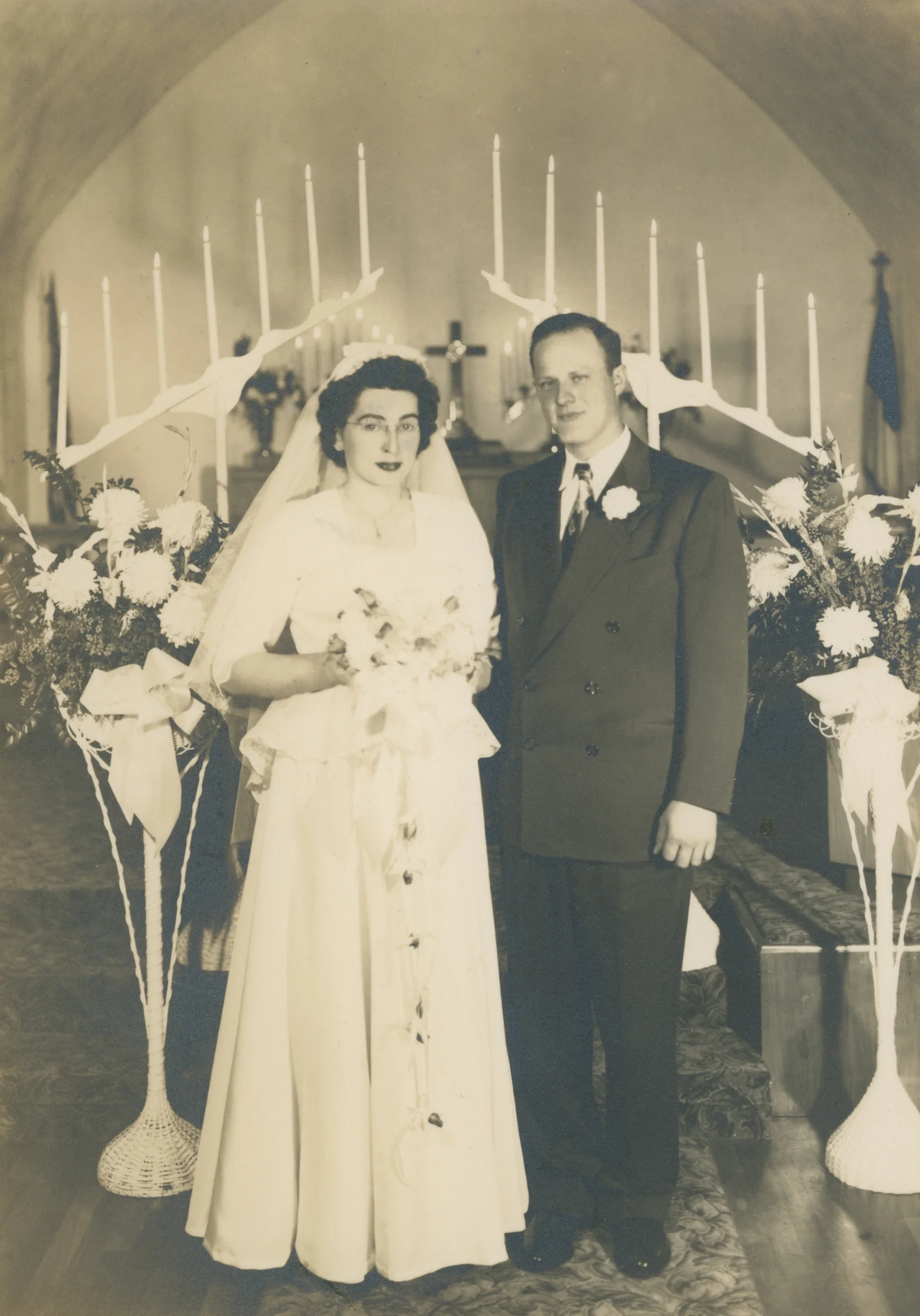
On October 16, 1951, they married by candlelight at Immanuel Lutheran Church in Centralia, with about 140 guests present. It was also Otto and Milly’s thirty-third wedding anniversary. Eileen walked with her father, wore a white gown of taffeta and lace, and joined Bud at the altar. The family photographs follow the day from the bridal portraits to the gathering at Hunter House afterward.
Her parents, relatives, and friends fill those pictures. Looking through them now, we can see the families coming together around Eileen and Bud at the beginning of their married life.
Making a family of their own
The first years of marriage brought children and loss close together. Milly died on November 18, 1952, just a week after Eileen’s twenty-ninth birthday and before the birth of her first baby. She had known a grandchild was coming. For Eileen’s birthday she gave her a black maternity dress, which Eileen then wore to her mother’s funeral.
Martha Ann arrived in February 1953. Years later, writing about her mother, Eileen said, “How I would have loved having her see and know each of our children.” That wish helps explain the care she eventually took to introduce those children to their grandparents through pictures and letters.
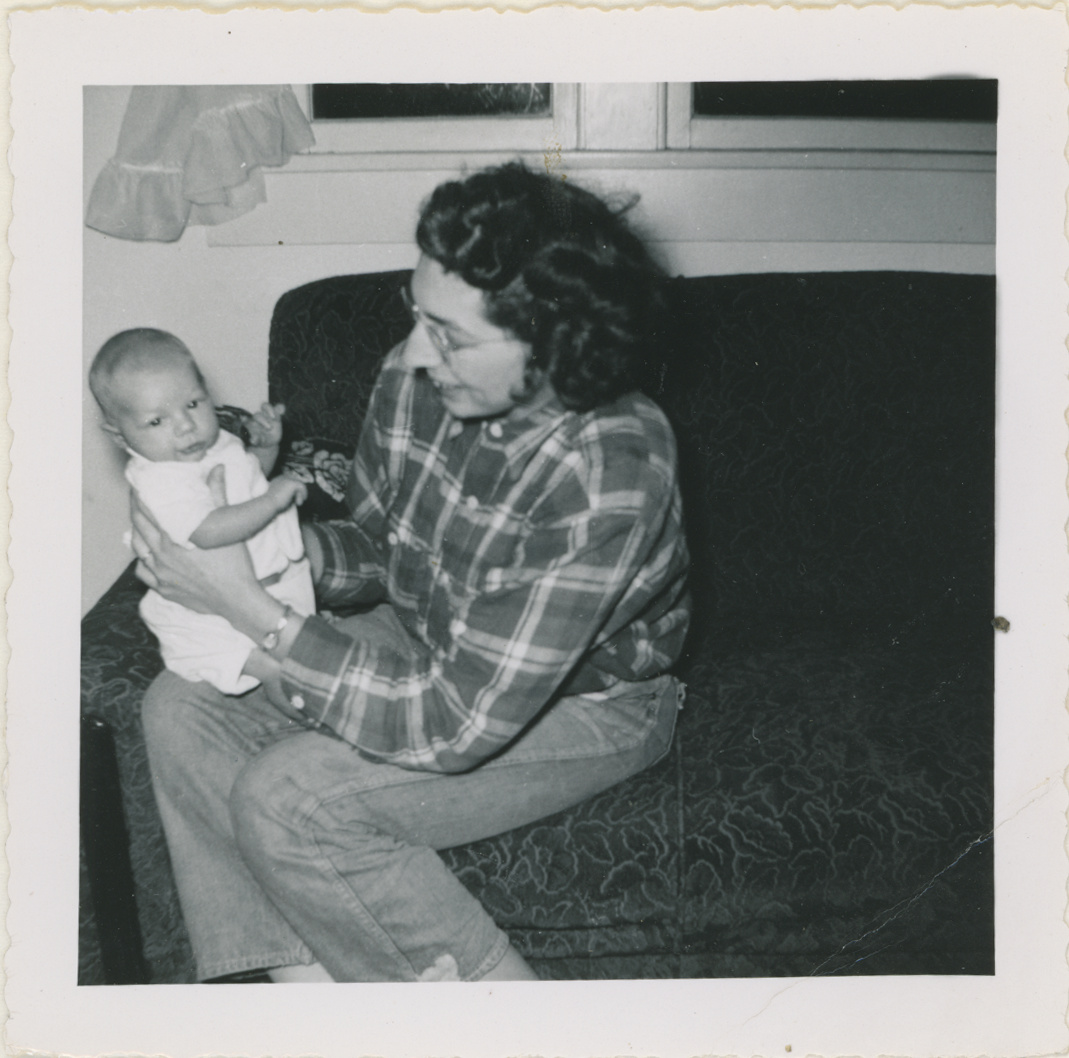
William Otto, called Bill, followed in 1954. Photographs show Eileen holding him at the little Cinebar house, and other pictures bring the children back to the Hilpert farm. Otto lived to see Martha and Bill, but died on March 26, 1955. Albert Frederick was born that October, and Betty Louella, usually Betty Lou, joined the family in June 1958.
Anna Rae Wertz also became part of their household. She came to live with Eileen and Bud as a foster daughter around 1956 and stayed until she moved out after high school. Her place in the family was different from that of their four biological children, but she belonged in the story of their home. Later newspaper accounts include her at family gatherings and helping at Martha’s wedding reception.
The albums preserve visits, babies in arms, fishing, and time at the Cinebar house and the family farm. They also show friendships continuing through marriage and children. In March 1953, only weeks after Martha’s birth, Eileen and Bud stood with her bicycling friend Velma when Velma married Roy Fredrickson.
A teacher in the life of the community
Marriage and motherhood did not end Eileen’s work with children outside her own home. She resigned from her Washington School kindergarten position in 1952, but the following year she was teaching in a new private Community Kindergarten at Centralia’s First Methodist Church. The program followed the defeat of a levy for public kindergarten.
In the years that followed, she taught at Oakview. At a school open house in 1964, she and other teachers demonstrated mathematics work for parents, and her class helped with refreshments. In February 1965 the Oakview PTA presented its second-grade teacher, Mrs. Frank Townsend, with an honorary life membership, recognizing her years in Centralia schools and kindergarten work.
Her children’s activities brought another set of school and community connections. She helped with transportation for a Brownie train outing that included Martha, and took part in a Cub Scout program where Albert received a denner badge. Later, Eileen and Bud both served on the Rainbow Girls advisory board while their daughters participated. Eileen also helped with installations and other Rainbow events.
Oakview Grange was a thread running through much of her life, reaching back to the years when she was still Eileen Hilpert. She served as lecturer and later worked on education matters. School gatherings, Grange programs, youth groups, and family celebrations often brought the same neighbors together. Eileen’s name appears among them as a teacher, a mother, and someone helping with the work of the occasion.
A wedding dress through the generations
As the children grew up, some of the things Eileen had saved became part of their own important days. When Martha married John Harjo on August 24, 1974, she wore her mother’s wedding gown and a gold-and-pearl necklace that had belonged to the family’s earlier weddings. Betty Lou was her maid of honor, Bill and Albert helped with the candles, and Anna helped at the reception.
Two years later, Betty Lou wore Eileen’s gown when she married Gary Grauman on October 16, 1976—exactly twenty-five years after Eileen and Bud’s wedding. She also wore the necklace Milly had worn on October 16, 1918. The date now linked three weddings in three generations.
The celebration at Oakview Grange honored both the newlyweds and Eileen and Bud’s silver anniversary. More than two hundred guests attended. The wedding report described a cake for the bride and groom and a smaller, similar one for the Townsends. What Eileen had once helped arrange for her own parents had, in another form, become a celebration of her marriage too.
The albums she left for us
Eileen’s family-history work began with a particular question. Milly had told her that Otto proposed in a letter. When Eileen found her parents’ letters tied in ribbons in the attic, she wanted to find that proposal. Then the photographs suggested something more: she could bring the letters and pictures together so her children would know the people behind them.
She gathered what Milly had saved and added photographs and letters returned by relatives and old friends. She copied the letters and newspaper clippings so each child would have the same written story, then divided the original photographs among the albums. That is why the four Otto and Milly albums belong together, even though their pictures are not identical.
In 1990 she dedicated the work to her children so they could know their maternal grandparents better. She did more than record names. She remembered clothes her mother sewed, her father’s quiet habits, family visits, houses, gardens, and the people standing just outside the main events. Her captions give later generations a way into lives they could never have known firsthand.
Eileen died in Centralia on November 1, 2004, ten days before her eighty-first birthday. She was buried at Shoestring Cemetery near Onalaska. Bud lived until 2009. Their children and grandchildren still have the letters, photographs, and memories she brought together—and, through her own words, something of the woman who took the time to explain them.
Her invitation at the end of the album foreword still suits the family book today: “I hope you’ll find some time someday to look through these albums and get to know your ancestors a little better.”
Letters, photographs and sources for Eileen’s story
This biography draws on Eileen’s family albums and recollections, the Eileen Letters collection, saved newspaper articles, the family’s Ancestry records, and family information about Anna Rae. The letters include Bud’s correspondence and the Shoreline superintendent’s letter of May 27, 1947.
- Eileen’s introduction to The Lives of Otto and Milly and her explanation of the four albums.
- June 18, 1948 trip announcement and January 29, 1949 account of her European bicycle trip. The surviving scan has folded sections; this story uses its visible passages.
- The Daily Chronicle, October 19, 1951: Eileen and Bud’s wedding (Newspapers.com: subscription may be required).
- The Daily Chronicle, February 23, 1965: honorary PTA life membership (Newspapers.com: subscription may be required).
- The Daily Chronicle, September 21, 1974: Martha and John’s wedding (Newspapers.com: subscription may be required), and November 10, 1976: Betty and Gary’s wedding and Eileen and Bud’s anniversary (Newspapers.com: subscription may be required).