Millie’s story
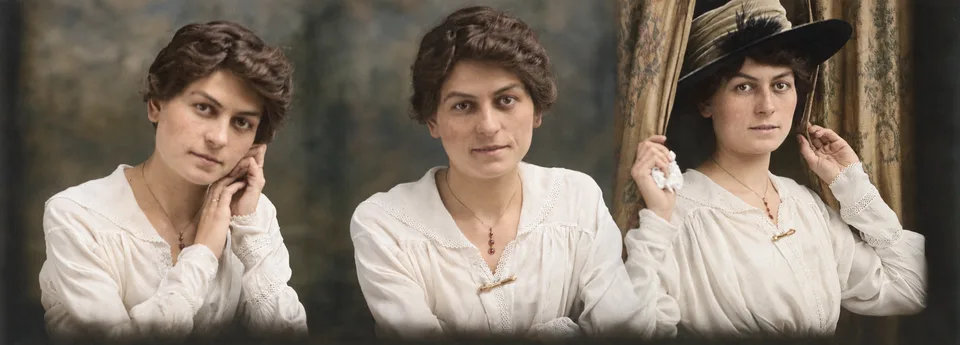
Before she was Eileen’s mother, before the farm near Centralia became her home, Millie Dortzbach was a young woman with a responsible job, good friends, and places she wanted to see. She worked in Denver’s telephone offices, taught new operators, took on a manager’s duties, and traveled with her friend Anita. When Otto Hilpert first asked her to marry him, she explained that she had always thought of herself as a businesswoman. It is a wonderful place to begin getting to know her: in her own words, with a life already well underway.
The family later knew another side of Millie just as well. Her daughter, Eileen Townsend, remembered clothes sewn at home, children practicing their school programs at the piano, and her father joining her mother’s music with his harmonica. Millie saved letters and photographs from both parts of her life. Eileen gathered them into the albums that now allow us to follow the girl from Wisconsin, the young woman in Colorado, and the wife and mother who made her home in Washington.
From Wisconsin to Colorado
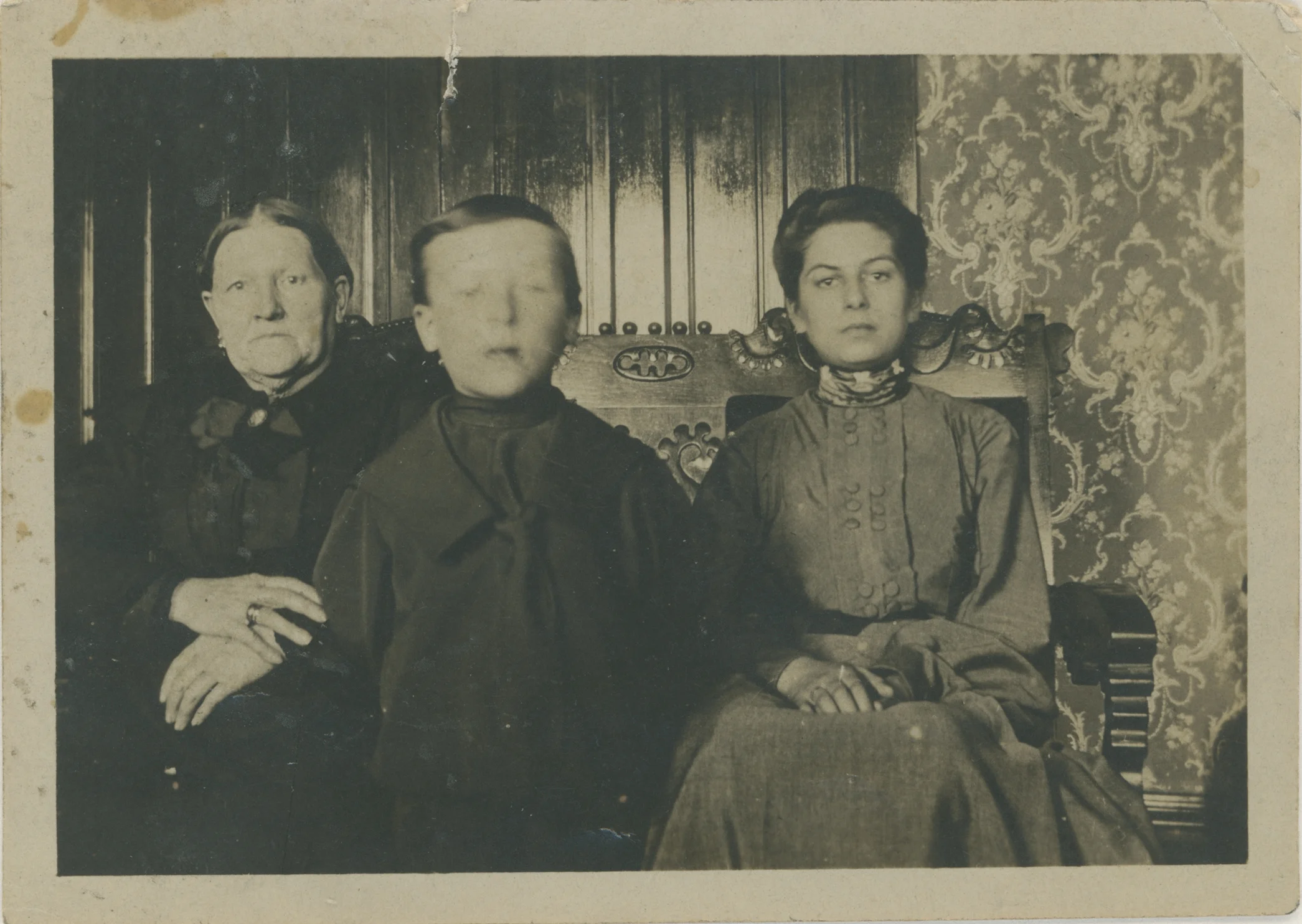
Millie was the oldest child of Peter and Ida Dortzbach. She arrived in Milwaukee on February 1, 1890, less than a year after her parents married. Her given names, Emilie Kjesten, connected her to her two grandmothers, Emilie Pleis Falkenrath and Kjesten Schmidt Dortzbach. Peter had come from the Schleswig region, and Ida from Germany. Ida’s parents were Carl F. Falkenrath and Emilie Pleis; through them, Millie belonged to a large circle of Wisconsin relatives who remained important throughout her life.
Eileen explained that a teacher began calling her mother Milly, and the family adopted the name. That is the spelling Millie generally used in her letters, although Millie also appears in family and newspaper records. Her sister Annie followed in 1891, and a brother, George Karl, in 1893. Years later, another little brother, Carl George, joined the household.
During the mid-1890s, Peter and Ida took their young family west to Cripple Creek, Colorado. Pictures from those years show Millie and Annie as small girls, and a school photograph places Millie among her classmates. The Dortzbachs became friends with the Schaefer family there. Herbert Schaefer, who would eventually have a part in introducing her to Otto, belonged to that earlier chapter of her life.
Wisconsin was still home to aunts, uncles, cousins, and grandparents. In August 1899, Millie and Annie were back in Racine for the wedding of their Aunt Hulda Falkenrath and Charles Brinkman. The local newspaper named the two little girls from Cripple Creek as flower girls. It is an especially welcome glimpse of Millie’s childhood, preserved independently of the family photographs.
Childhood also brought loss and illness. Her brother George died in Cripple Creek in 1900. In her early teens, Millie developed an illness the family called St. Vitus’ dance. Eileen recorded that a doctor recommended a lower altitude, so she went to Racine to live for about a year with Aunt Hulda and Uncle Charlie. While there, she attended St. Catherine’s, the nearby Catholic school. Her family was Lutheran, and Eileen remembered hearing that her aunt wanted her to remain Lutheran, but also that the sisters at the school treated her kindly. A school bill preserved in the albums documents this Racine schooling in 1905.
Peter’s work took the family to other Colorado communities, including Platteville and Boulder. In Boulder, the family account describes Millie and Annie helping their mother with hotel work. Both girls contracted typhoid fever during that period. The family eventually settled in Denver, where Millie’s adult life began to take shape. The exact dates of every move are not equally clear, but the pattern is: her childhood involved new homes, work shared within the household, and continuing ties to relatives farther east.
A career at the telephone office
Before working for the telephone company, Millie worked in a millinery store. The skill stayed with her. Long after she left that employment, she made hats for herself and sometimes for friends. Family recollection also places some of her early switchboard work in Cripple Creek. Her surviving letters give us a much firmer picture of her later telephone career in Denver.
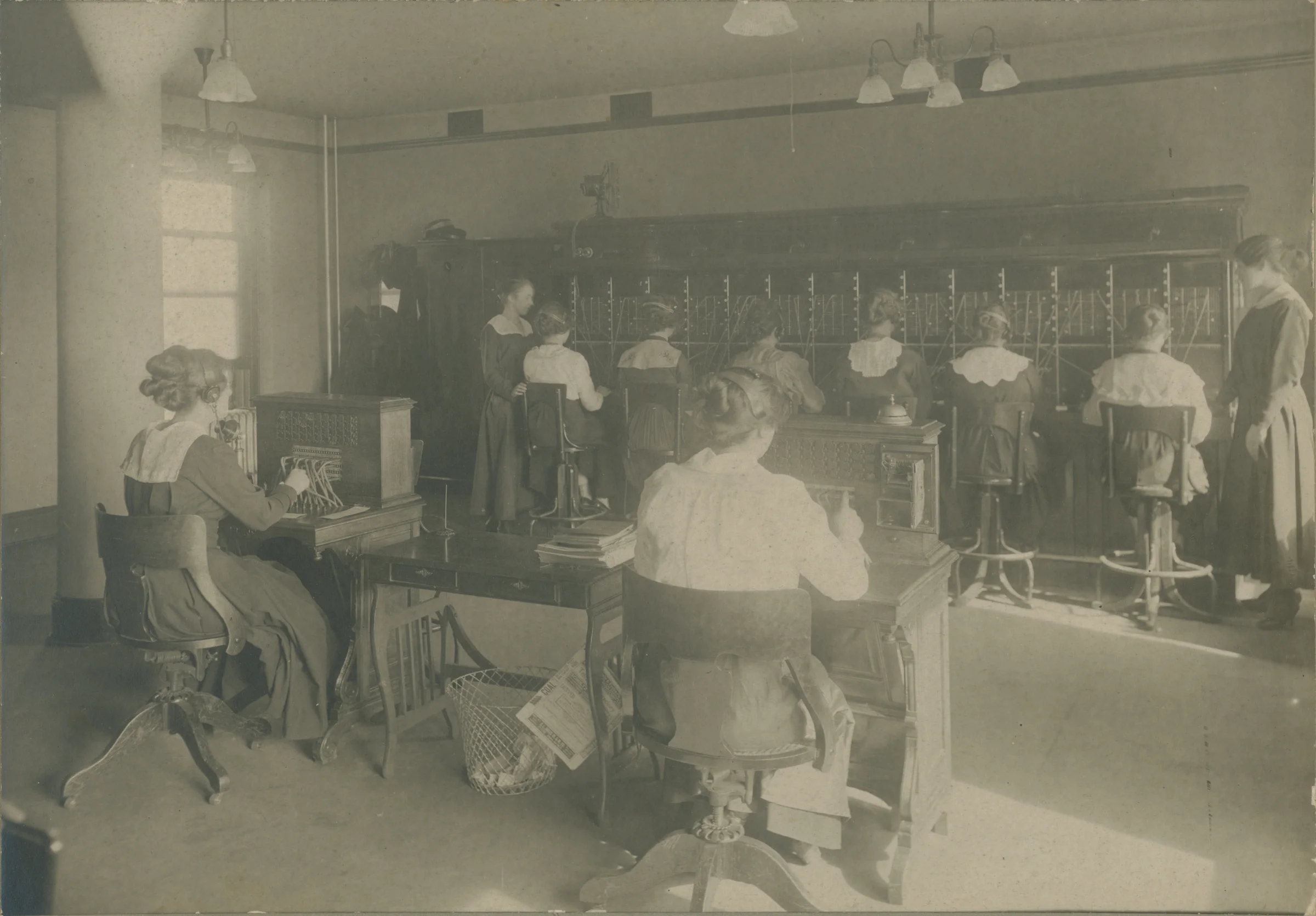
By the time she began corresponding with Otto in 1916, telephone work was a central part of her life. In January 1917, she reported a promotion to the main building, where she was teaching new operators. The course lasted three weeks, and she was one of seven teachers working with about two hundred pupils. By May she was back at the York office as a supervisor, working eight hours a day, six days a week.
Her letters make it clear that this was demanding work. She wrote about the number of operators and the volume of calls, but also about staff leaving and the constant need to train replacements. During the war, men’s departures opened positions that had previously been filled by men. In January 1918, she told Otto that she had been offered the job of York chief operator and evening manager. The pay was better, but the split hours were difficult. Soon she was also preparing to cover the day manager’s position if he were called away.
Millie had a clear sense of responsibility to the office and to the people who depended on her. When marriage became a serious possibility, she explained to Otto that she had promised to help at work and could not immediately leave. She liked the work, she said, even though it wore on her. Her letters let us see both things together: the satisfaction of being capable and trusted, and the strain of keeping a busy office running.
Friends, travel and meeting Otto
There was plenty in her life outside work. She went to the theater and picture shows, visited friends, made clothes and hats, and kept in touch with relatives in Wisconsin. She and Anita Chance were close friends and traveling companions. Their western trip in 1916 included the visit to the Hilpert farm near Centralia that eventually changed Millie’s life.
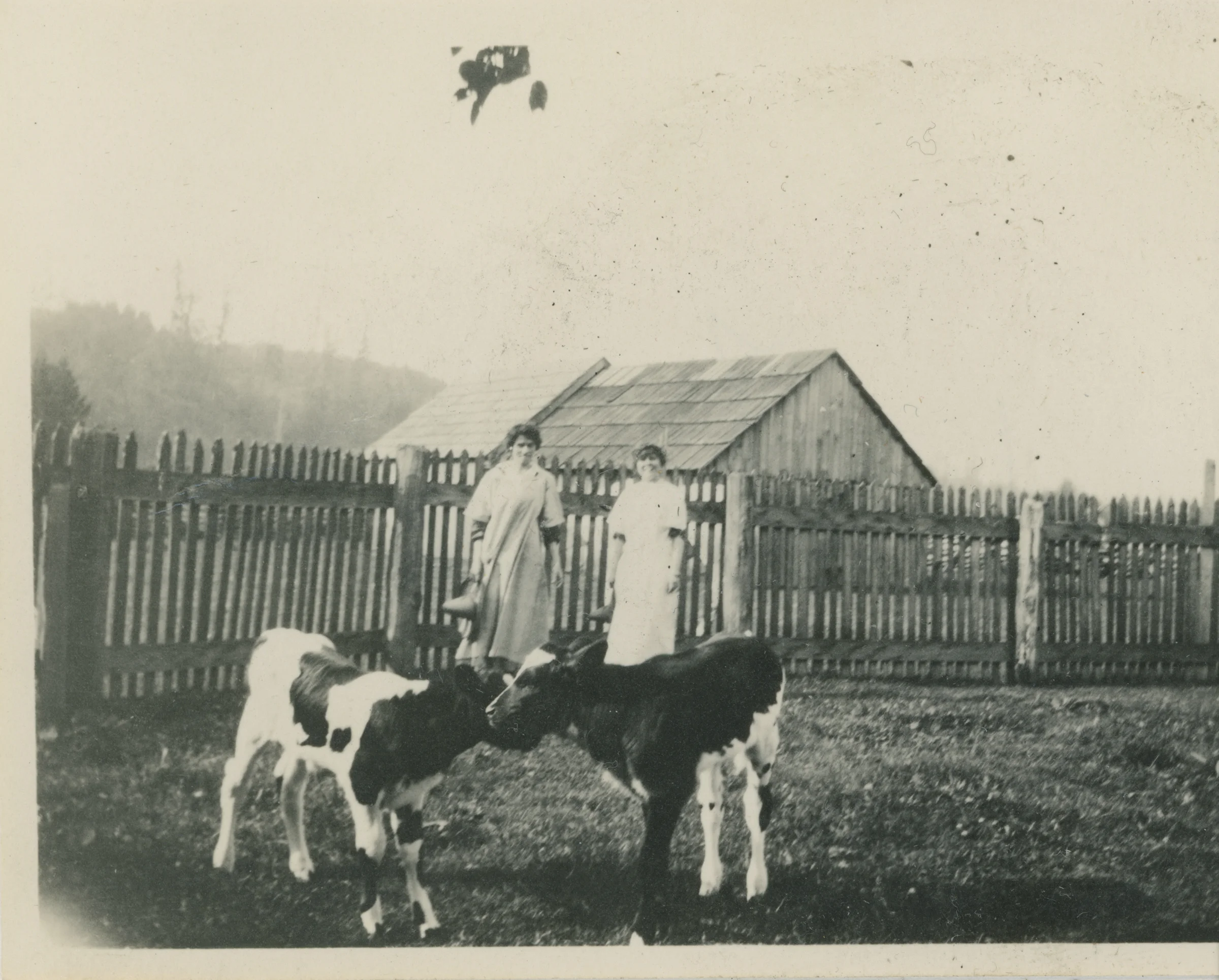
For the moment, though, it was one happy stop on a larger holiday. She admired the river and enjoyed the country setting. In the family version of the story, Herbert Schaefer urged the young women to stop in Centralia, where his wife, Helen—Otto’s sister—was visiting. Photographs were taken, and afterward Otto asked for copies. Millie initially thought he was married; Helen explained that she had confused him with his brother Phillip. The letters that followed began as friendly exchanges.
Millie continued traveling. In 1917, her letters describe a long eastern journey that took her through cities including Chicago, Washington, Philadelphia, and New York, with stops at Niagara Falls, Detroit, Racine, and Milwaukee. She visited Mount Vernon, saw theatrical performances, and attended a World Series game at the Polo Grounds. Even while on holiday, she took an interest in telephone offices and how they operated. Her accounts are full of the things she had actually seen and done, and the pleasure of having news to tell.
A courtship through letters
Otto visited Denver that fall. They went out together, attended shows, and took a trip to Lookout Mountain. Afterward, the correspondence became more affectionate, although Millie was still surprised when his January 1918 letter asked for more than friendship. She did not pretend to be certain before she was ready.
“I really don’t feel as if I know you well enough,” she told him, explaining that she needed time before making such a promise. She had not yet told her parents or Helen. First, she wanted to understand her own mind. She described herself as someone who had always thought of herself as a businesswoman and had thought little about marriage. There is a candid, recognizable person in that answer: someone unwilling to make a life-changing promise simply because others might welcome it.
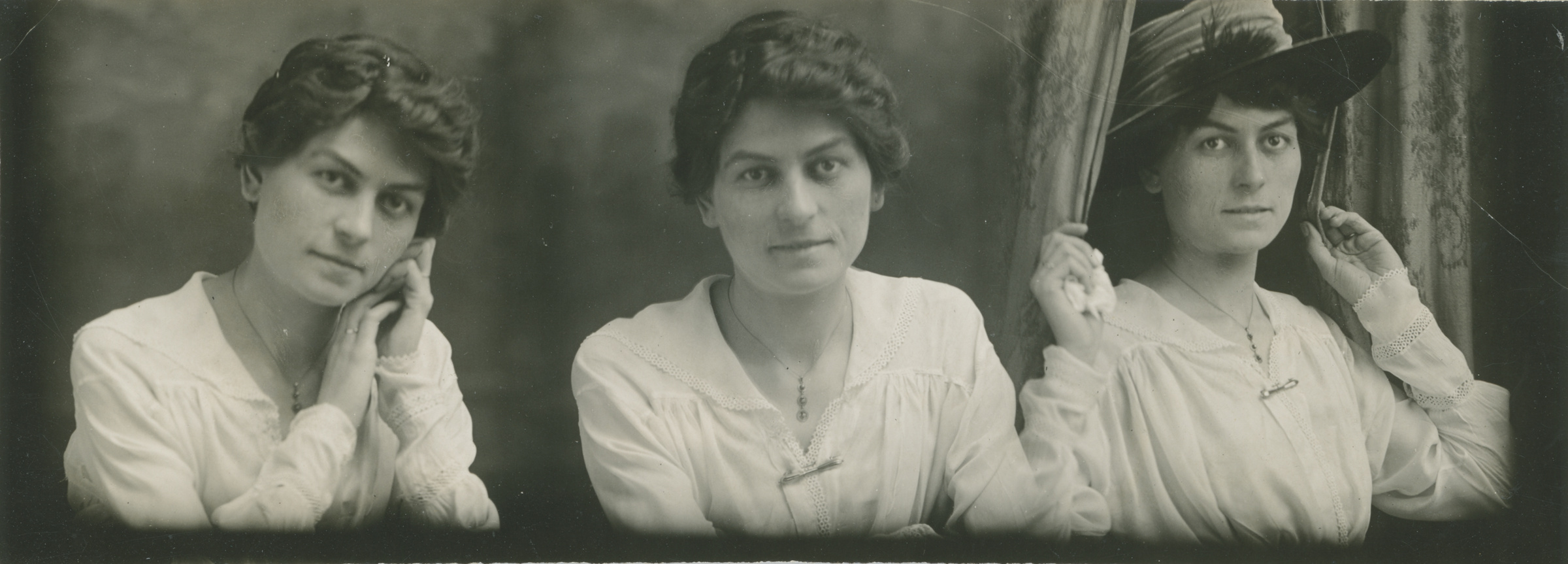
Otto waited, and they kept writing. Millie placed his photograph on her dresser and told him about saying good morning and good night to it. By the end of March, she believed she loved him but wanted him beside her, holding her and asking her in person. The waiting was no longer only his. “I live for Thursday now,” she wrote of the day his letter arrived, “wish there was seven Thursdays in a week.”
The summer of 1918 was busy with work, family, and preparations for his return. Her friend Anita went to France for wartime service, something Millie also considered but did not undertake. At home, a new Ford brought another kind of independence. By August, after learning to drive, Millie was teaching her father and young brother Carl. Her playful word for the lessons was “Fordizm.”
A wedding and a new home
Otto reached Denver that fall, but their plans were interrupted when he became dangerously ill with influenza. According to Eileen, Helen nursed him for two or three weeks. He recovered, and on October 16, 1918, he and Millie married outdoors at Peter and Ida’s home on Marion Street. Millie was twenty-eight, Otto thirty-seven. The newspaper accounts and family recollections explain that the influenza emergency affected the arrangements for the gathering.
Autumn flowers and leaves decorated the wedding, and the family photographs preserve the couple and their attendants. Eileen later recorded that her mother’s friend Betty made the wedding dress. She also preserved the family story of Aunt Helen insisting that Otto improve his choice of engagement ring. These details belong to the family’s retelling of the occasion, alongside the dated invitation and contemporary wedding notices. After a honeymoon trip, Millie left her Colorado home for married life on the Hilpert farm in Washington.
Her early letters from the farm show her making that new life her own. In February 1920 she described their small sixteen-by-thirty-two-foot house to Helen and Herbert. The front room was both bedroom and living room; there was a roomy kitchen, a blue stove, and cupboards and storage fitted around the limited space. Otto’s work shoes had their own place beneath the chimney. They planned a larger house later. Meanwhile, she was making divinity candy that Otto liked and looking forward to having the piano moved. “We have lots of fun,” she wrote.
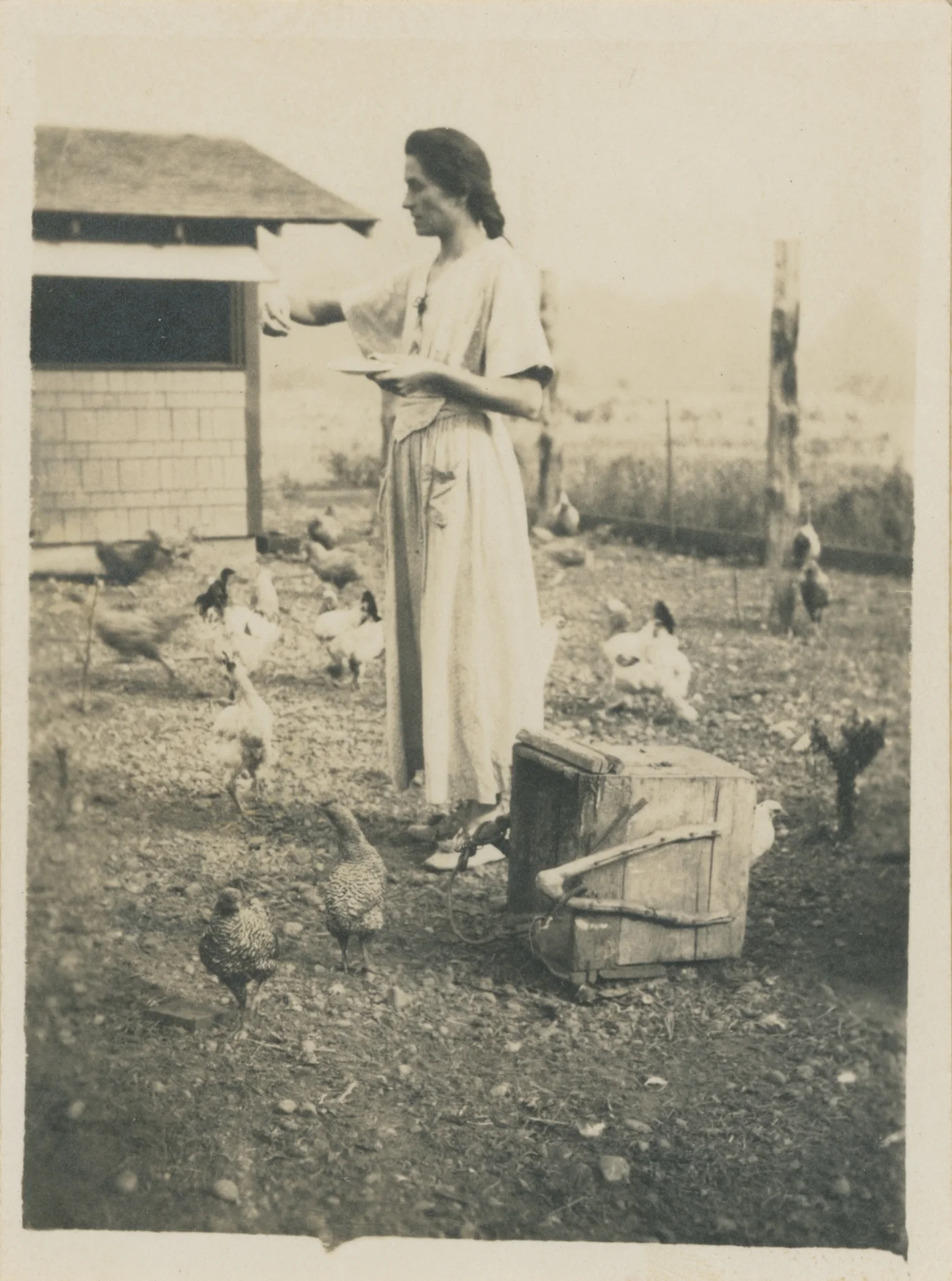
The photographs give the same period a more physical shape: Millie with the chickens, animals around the farm, hay work, and the frozen river on which she and Otto stood in December 1919. The albums also document the barn and silo being built in 1921. Her life had changed considerably from managing an urban telephone office, but her letters still attended closely to arrangements, money, other people, and all the details that made a household function.
Becoming Eileen’s mother
She continued visiting Colorado and writing home to Otto when they were apart. In January 1923, a letter from Denver describes a full round of family visits, outings, and plans for her return train. It also mentions a course of medical treatments, without naming the condition being treated. Eileen later heard from a cousin that her parents had wanted a child and that her mother had sought medical help in Denver. The surviving letter confirms treatment during that visit, but does not explain its purpose. What is certain is that later that year, on November 11, Millie and Otto welcomed their daughter, Eileen, their only child.
For the years that followed, we are especially fortunate to have Eileen’s memories. Her mother made most of her own clothes and Eileen’s, as well as clothes for Carl’s children and for other children who needed them. Good fabric was worth saving. Millie would take apart an old coat or dress, turn the material over, and make something that looked new. The millinery experience of her younger years lived on in the hats she made.
Music, home and family
Music was another gift she shared freely. Eileen remembered her mother practicing with children for school programs and giving piano lessons, sometimes without charge. When she thought a family could afford it, a lesson cost fifty cents. She served for years as musician at Oakview Grange. Newspaper reports of piano solos, accompaniments, and musical programs supply dates for what Eileen remembered as a familiar part of home and community life. At home, Otto sometimes joined in on his harmonica.
The family’s musical circle included Clayton “Zeke” Campbell, whose trumpet playing Millie accompanied. Eileen’s captions remember him among the people close to the household. The albums make clear how often friendship, music, and family life overlapped. So do the newspaper notices of card parties, picnics, visiting relatives, and gatherings at the Hilpert home.
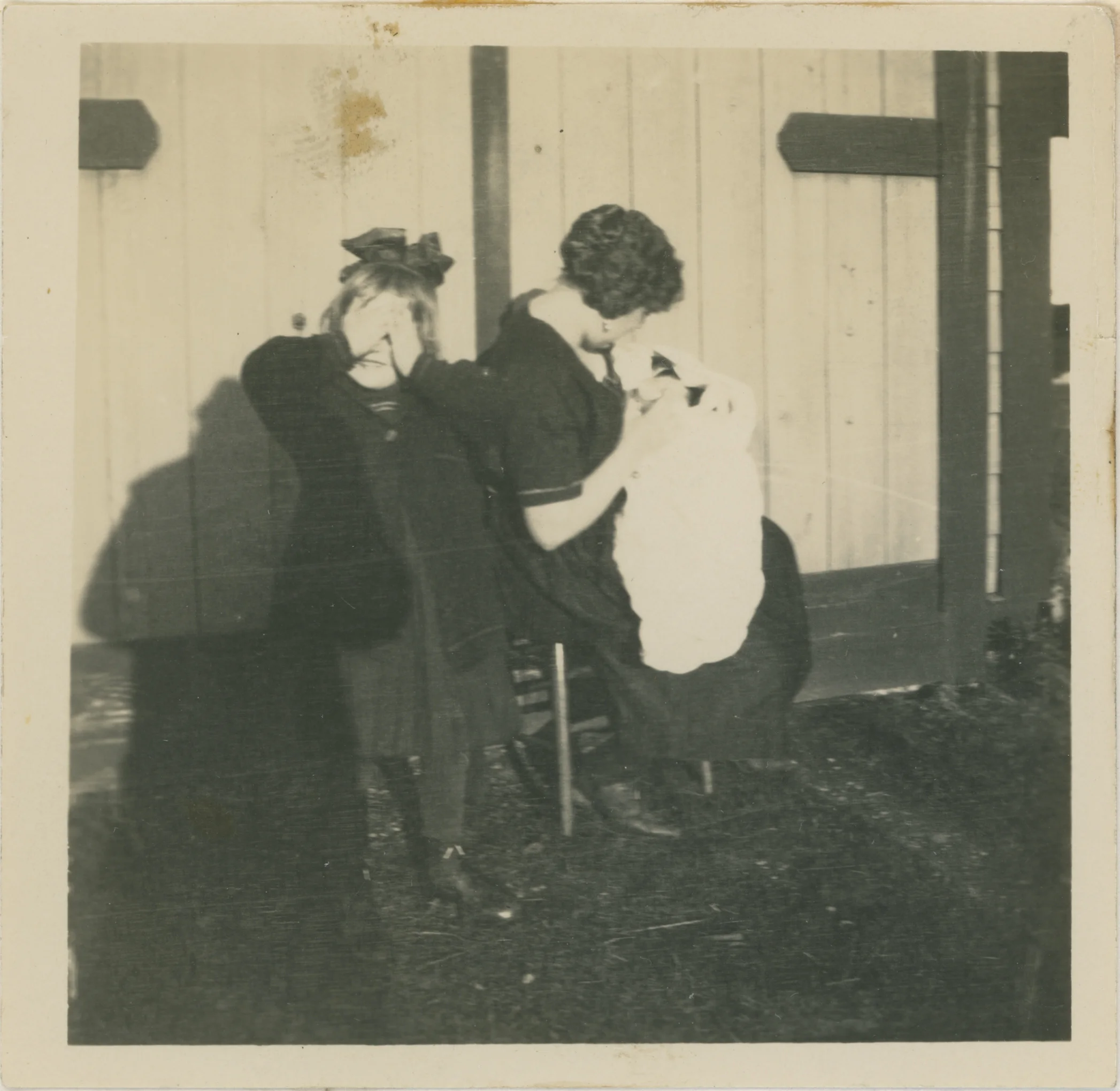
Millie also took an interest in the grounds around the house. Newspaper coverage records gardening recognition and participation in the local farmyard beautification contests in the early 1930s. The farm was a workplace, but it was also a home people visited, photographed, and enjoyed. Eileen’s childhood pictures include dogs and dolls, cousins, family outings, and the people who came through that home.
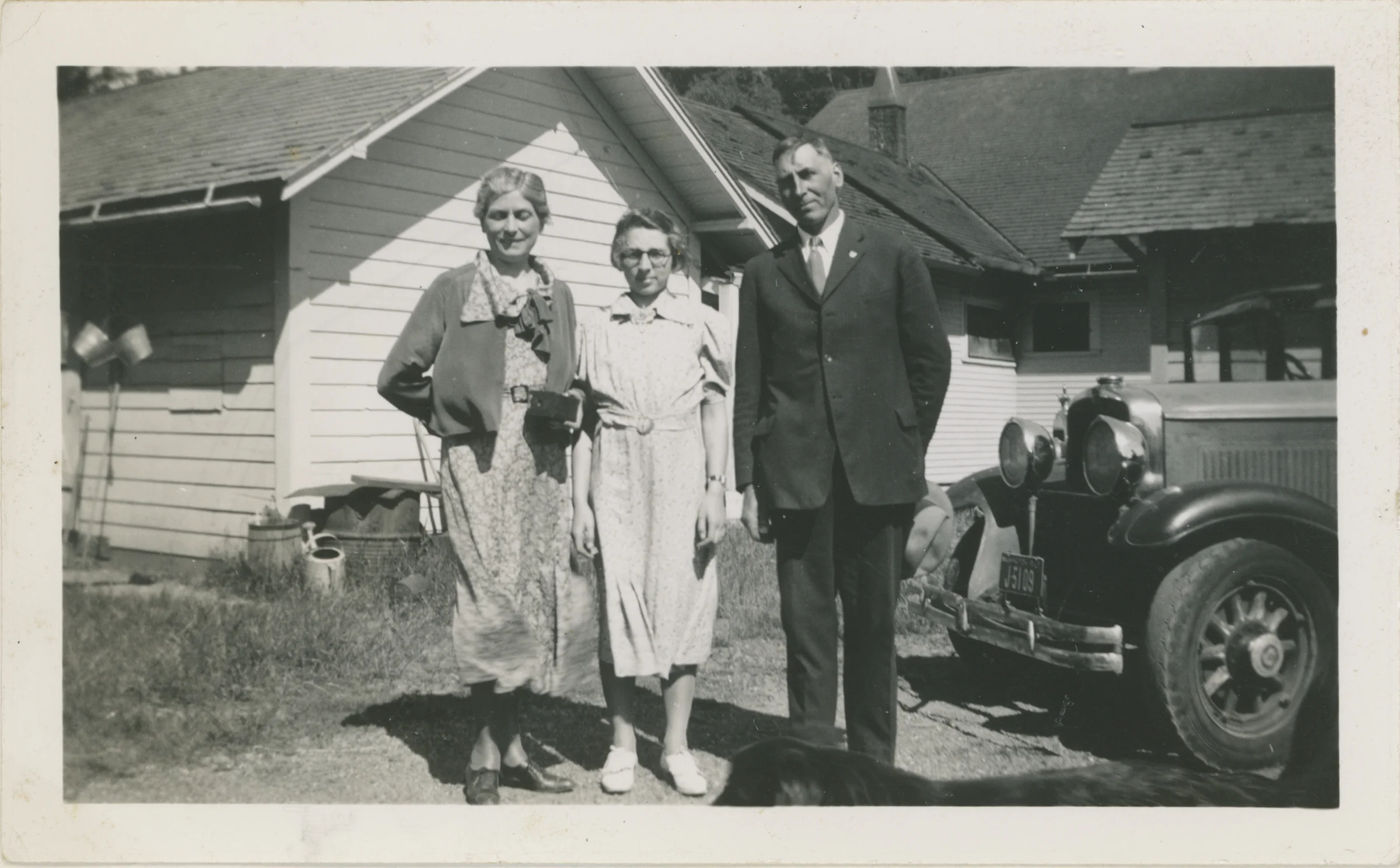
Peter and Ida joined the household in their later years, after financial difficulties that Eileen described in her family account. Their presence gave Eileen the everyday companionship of her grandparents and gave Millie another set of family responsibilities. Ida helped with cooking, Peter repaired shoes and kept himself useful, and Millie drove them to appointments and other necessary places. Eileen remembered their gratitude to Otto for making them welcome.
Her mother’s character was not softened into perfection in those memories. Eileen described Millie as high-strung, easily upset, and inclined to see things in definite terms. In the same account, she described the time her mother gave to children’s music and the clothes she made for people in need. Both belong in her story. They let us know a particular woman, with firm opinions, useful skills, and people who relied on her.
Caring for family through illness and loss
Illness and bereavement repeatedly entered family life. Otto’s brother Phillip and Phillip’s wife, Alice, both died in 1932, leaving three children. Millie remembered how deeply the loss of his brother affected Otto. Later, her own parents died—Peter in 1942 and Ida in 1944—and her sister Annie died in 1945.
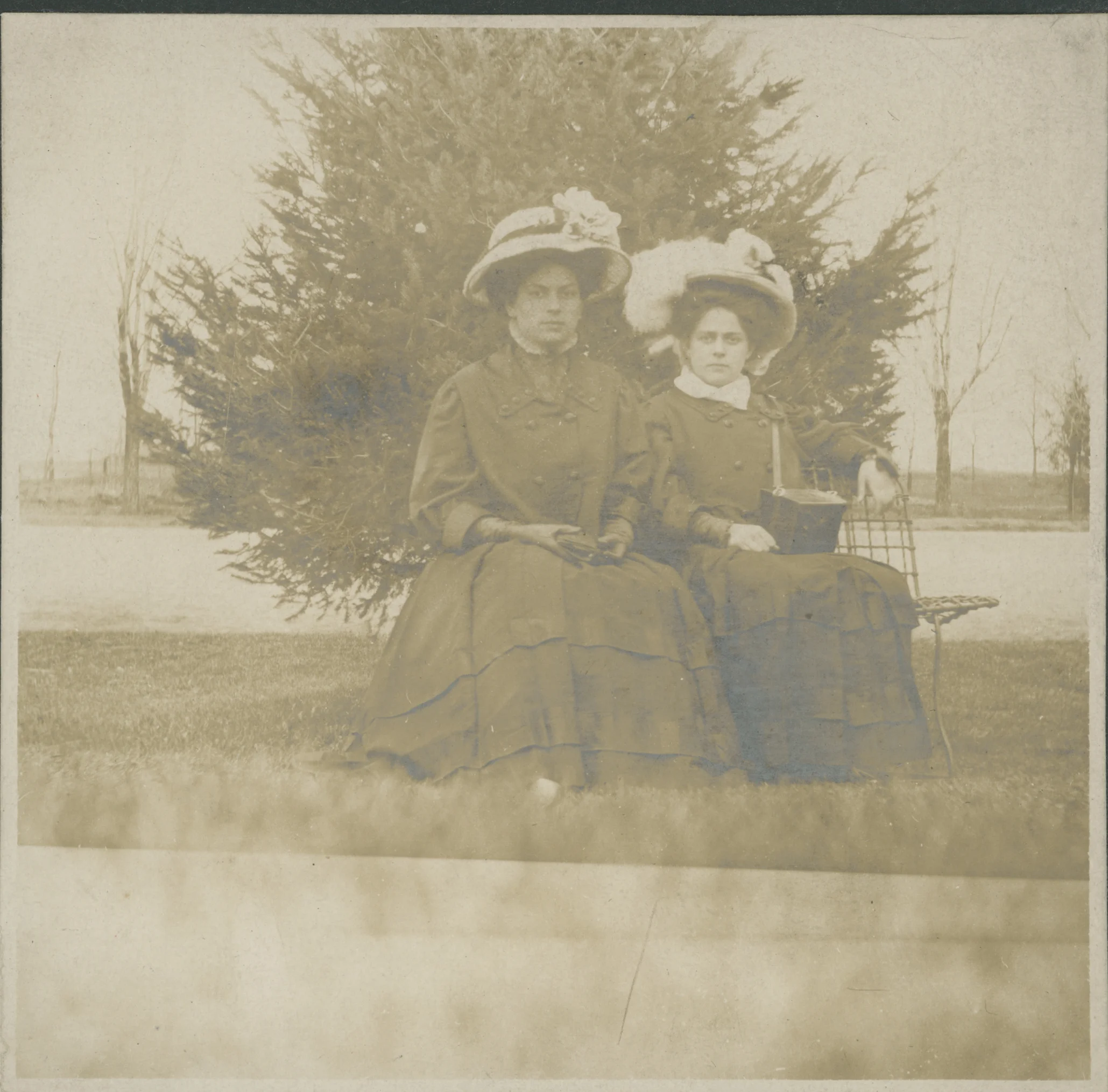
During Annie’s illness, Millie spent time with her in Halstead, Kansas. Letters kept her connected with Otto and the farm while she was away. He sent reports about Eileen, the animals, the neighbors, and ordinary work, and asked after Annie. One of Millie’s friendships from these visits was with the nurse Emma Evy, who later visited the Hilperts. The correspondence and photographs preserve the continuing relationships around an otherwise difficult part of her life.
Journeys and family celebrations
There were happy journeys and celebrations, too. The family’s 1939 California photographs include the Treasure Island fair and visits with relatives and friends. That year also brought Peter and Ida’s golden wedding celebration. In October 1943, it was Millie and Otto’s turn to celebrate twenty-five years of marriage. Eileen helped arrange a surprise gathering with their card club. Millie’s account carefully recorded the cake, table setting, guests, and gifts, including a swing rocker from members of the family.
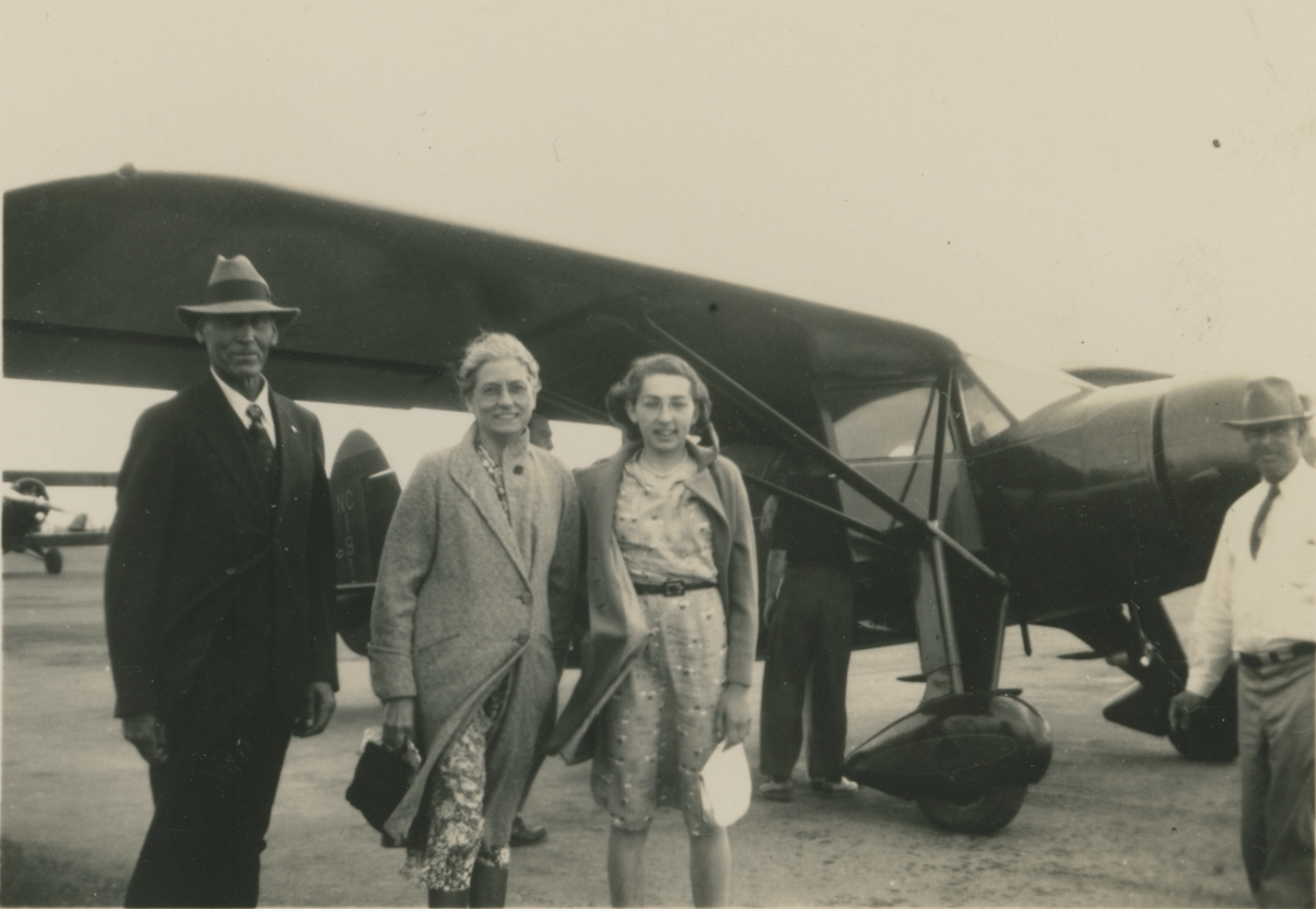
Eileen was growing into her own adult life, teaching away from Centralia and traveling. The farm remained a place to come home to, and visits went both ways. Millie herself returned to Wisconsin in 1947 for the wedding of her cousin Ruth Falkenrath and Kenneth Kelm. She traveled by train and spent several weeks visiting relatives. Decades after the little flower girl’s trip from Cripple Creek, those Wisconsin connections were still part of her life.
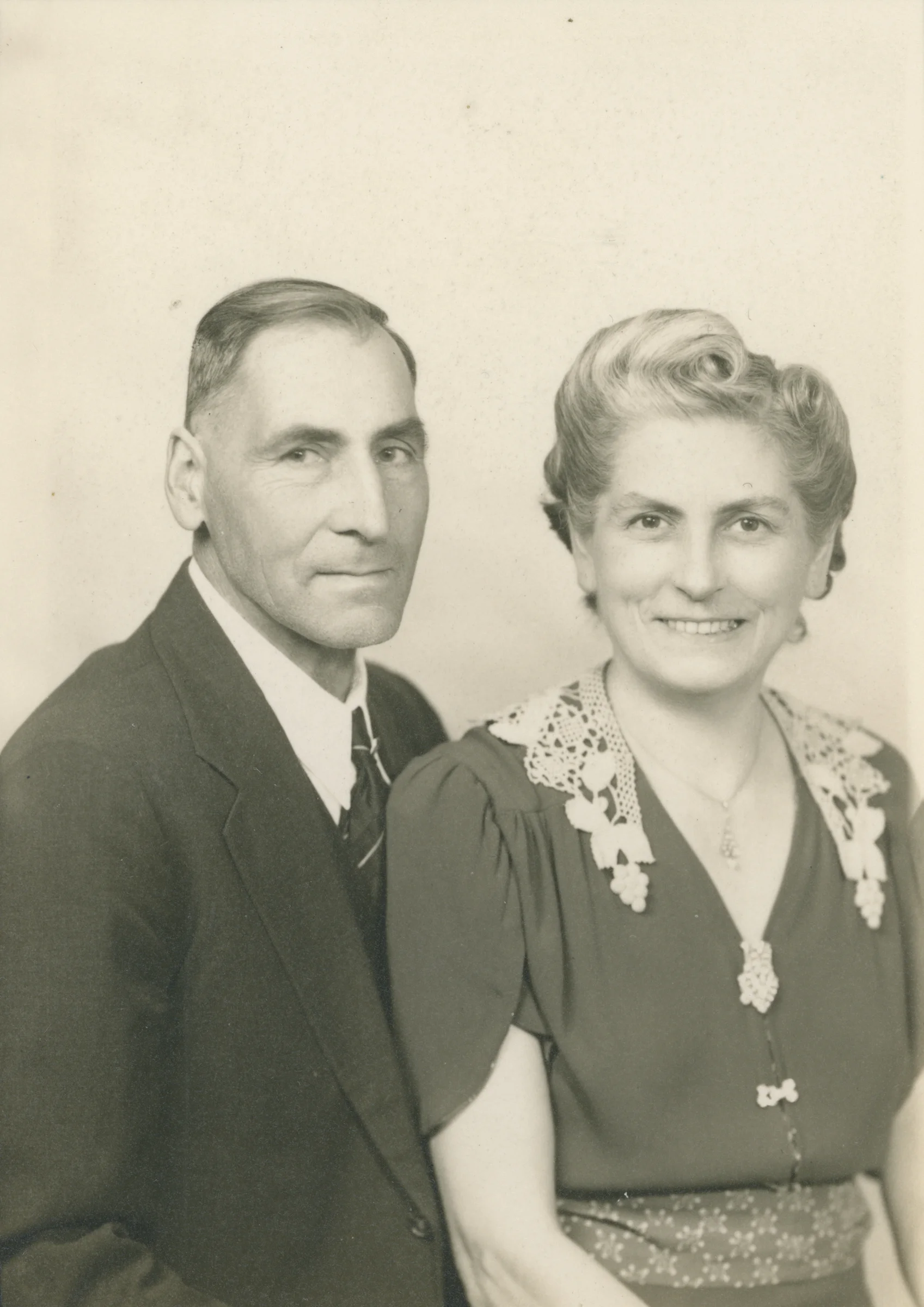
On October 16, 1951, Eileen married Francis “Bud” Townsend on her parents’ wedding anniversary. Otto gave her away, and Millie wore a wine-colored dress. The album photographs show the family gathered at the Hunter House reception. Their daughter’s marriage began on the date that had marked their own for thirty-three years.
Her final years and the memories she left
Millie’s health had often troubled her. Eileen remembered back and foot problems, headaches, bouts of flu, and heart attacks. Those difficulties existed alongside her sewing, music, visiting, and family work. In 1952, she received recognition for twenty-five years of continuous Grange membership. She was still taking part in its activities that autumn.
On the morning of November 18, 1952, she agreed to play a solo at the Grange, Eileen recalled. Then she went outside to feed the cats. When she did not come back, Otto found that she had died. The newspaper reported her sudden death at home from a heart attack. She was sixty-two.
Only a week earlier, Millie had given Eileen a maternity dress for her birthday. She knew that her daughter was expecting a baby. The dress was black, and Eileen wore it to her mother’s funeral. Years later, in the albums she prepared for her family, Eileen wrote about how much she wished her mother could have known her children. Millie’s first grandchild, Martha Ann, arrived the following February.
Those grandchildren and the generations after them were left something unusually personal: the letters Millie had kept, the photographs she had saved, and the memories Eileen took the trouble to write down. In them, she is still the woman managing a telephone office, describing a trip to a friend, weighing a proposal honestly, making a new home, and sitting at the piano while children practiced. We can know her through the work of her hands and through her own lively voice. Eileen’s albums bring both back into the family.