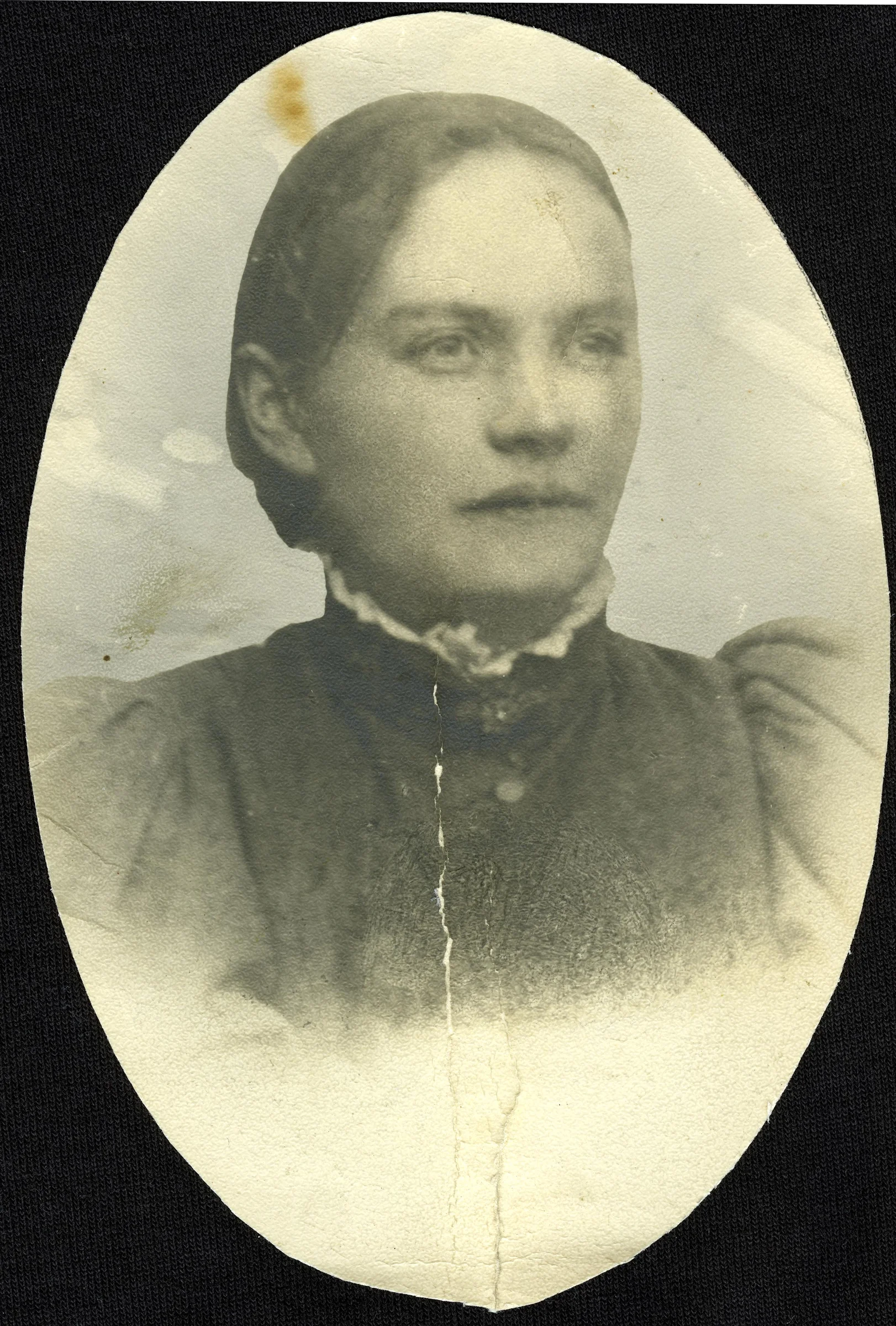
The Harjo family / Anna Kathrine Børresen

Anna Kathrine Børresen. Undated family portrait.

The Harjo family

Anna Kathrine Børresen

1871 – February 7, 1935

From a childhood in Tana and a foster home in Jakobselv to a family of her own at Larsnes, Anna’s story connects the Børresen, Harjo and Barski families.

Parents
Kristian Børresen & Brita Kathrine Henriksdatter
Marriages
Johan Ludvig Harjo · July 5, 1891
Petter Abanus Johansen Barski · June 13, 1909
Siblings
Bernt Vilhelm, Berthe Oline and Henrik Børresen
Children
With Johan Ludvig: Johan Bernhard · Hans Fredrik · Andreas Severin · Signe Margrethe · Isak Wilhelm · Hans Kristian · Karl Fredrik
With Petter Barski: Anna Mathilde
Also known as
Anna Kathrine Harjo; Anna Kathrine Barski

1871–1885

A childhood in Tana

Anna Kathrine was born in Tana in 1871, the daughter of Kristian Børresen and Brita Kathrine Henriksdatter. Kristian came from Tromsø, while Brita came from Kuivaniemi in Finland. Anna’s earliest baptism records place her parents at Norskholmen. She was baptized at home by Petter Eliassen, with her parents present, and the baptism was recorded in church on February 25, 1872. [1]

By 1875, the family was living at Petterlund. Anna had a younger brother, Bernt Vilhelm, and a baby sister, Berthe Oline. Another brother, Henrik, was born in 1877. Their father died on September 16, 1879, when Anna was eight, leaving Brita with four young children. [2] [3]

Anna’s grandfather, Henrik Sivertsen Laidinen, helped support his daughter and grandchildren. An account preserved in an 1881 parliamentary paper describes the family’s limited means and the help Brita received from him and from poor relief. It is a rare glimpse of the people who helped the children after their father’s death. [4]

By the 1885 census, Anna was living in Jakobselv as a foster daughter of Karl and Marie Kristine Buck, alongside their four children. Her own brothers and sister were in other households: Bernt with their mother’s second husband, Albert Enkvist, and Berthe and Henrik with their maternal grandparents. We do not yet know when Anna joined the Buck household, or the arrangements that brought her there. [5]

The Børresen family

Her parents, Kristian and Brita

Kristian Børresen and Brita Kathrine Henriksdatter came to their marriage from different places and different generations. Kristian was born around 1834 in Tromsø and worked as a labourer and fisherman. Brita was born around 1854 in Kuivaniemi, Finland. Her later marriage record refers to her confirmation in Alta in 1868, placing her in northern Norway while she was still a girl.

They married in Tana on July 2, 1871, the year Anna was born. Kristian was about thirty-seven and Brita about seventeen. Over the next six years, Anna was joined by Bernt, Berthe and Henrik. Their children’s records connect the family with Norskholmen, Petterlund and Sandlien at different times. [18]

When Kristian died in 1879, Brita was only about twenty-five. Her parents, Henrik and Else Gaisa Laidinen, became an important source of help for her young family. Henrik had a small holding near the Tana River, and the parish priest described him as hardworking and helpful to his daughter and grandchildren. There was little money to spare, but the surviving account makes his support clear. [4]

On December 27, 1881, Brita married Albert Enqvist, a man from Haparanda in Sweden. A few years later, Bernt was living with Albert at Petterlund, while Anna lived with the Bucks and the two youngest children lived with their grandparents. Those separate households are recorded, but the family arrangements behind them are not yet known. [19] [20] [21]

Brita died sometime after her marriage to Albert and before July 9, 1893, when he married again. His second marriage record says that his first wife had died. Her own death entry has not yet been found, so we cannot say how old Anna was when she lost her mother. [22]

1891–1906

A family of her own

In 1891, Anna was working as a domestic servant in Indre Kvænby in Vadsø. On July 5 that year, she married the fisherman Johan Ludvig Harjo. Anna was about twenty; Ludvig was twenty-two. Vadsø was the setting for the first years of their marriage and the beginnings of their family. [6] [7]
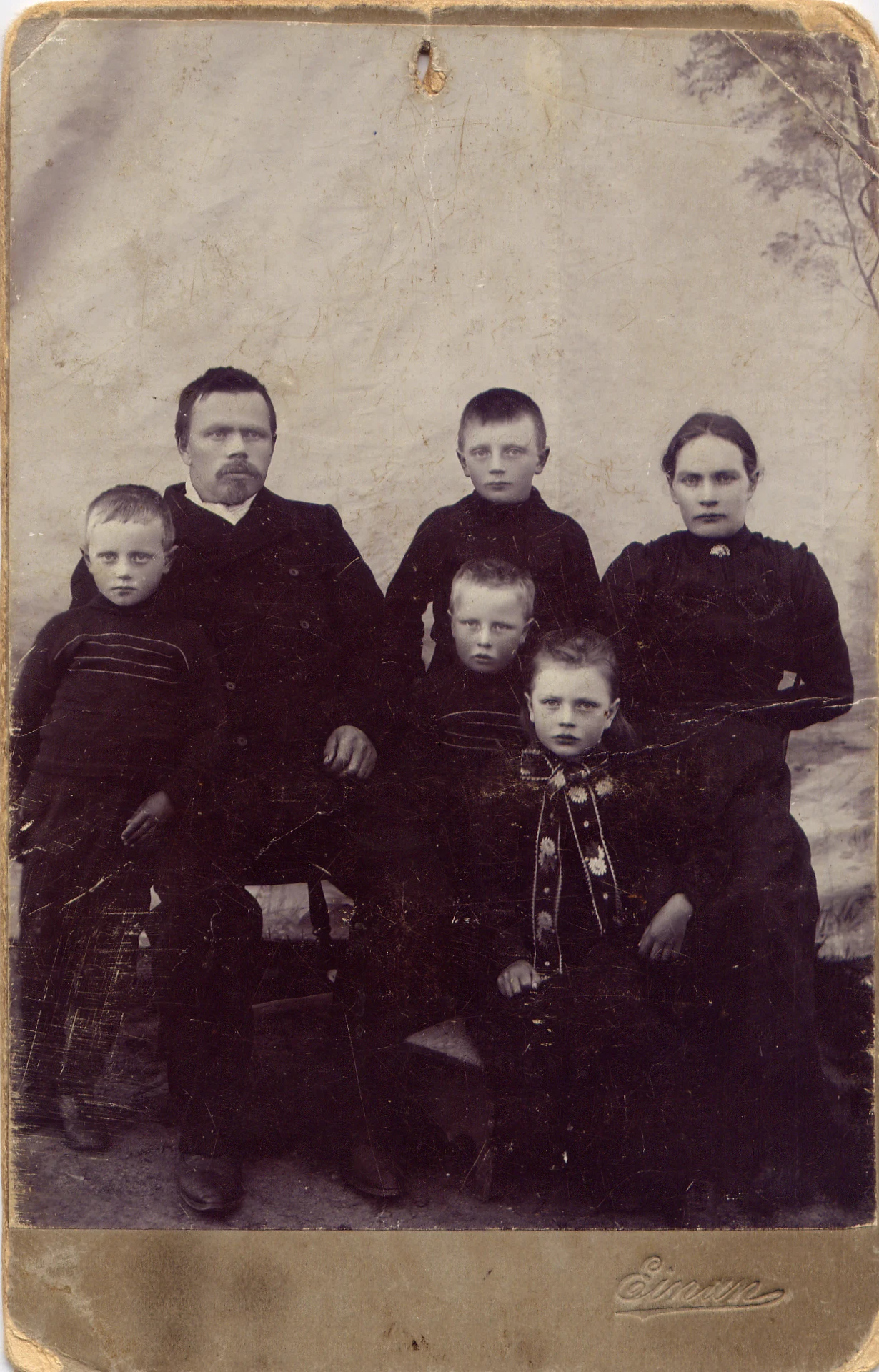
At the back are Isak Wilhelm and Andreas Severin. Johan Ludvig sits on the left, with Anna Kathrine on the right. Hans Kristian (Kristian) is seated at the front, and Signe Margrethe is the girl on the right. Johan Bernhard (Bernhardt) is not pictured. Anne-Lise Harjo identified the family in Finnmarken, 28 April 2011, and believed the photograph was taken in Vadsø. View the family’s copy with names

Their children were Johan Bernhard, Hans Fredrik, Andreas Severin, Signe Margrethe, Isak Vilhelm, Hans Kristian and Karl Fredrik. Hans Fredrik, born in 1894, was an older brother of Hans Kristian, who was born in 1902. Hans Fredrik’s baptism has been found, but what happened to him afterward is still an open part of the family story. [8]

The Børresen and Harjo families became connected a second time in 1896, when Anna’s brother Bernt married Ludvig’s sister Marie Cecilie. Their children would be double first cousins, sharing both sets of grandparents.

Anna and Ludvig moved from Vadsø to Masjok, most likely in 1899. That May, Ludvig’s father bought a farm property called Larsnes in the Masjok area, along with another holding; by Isak’s baptism later that year, Anna and Ludvig were living in Masjok. The 1900 census places them at Larsnes. Ludvig was a country merchant and tenant, while Anna’s work included caring for the home and the livestock. [9]
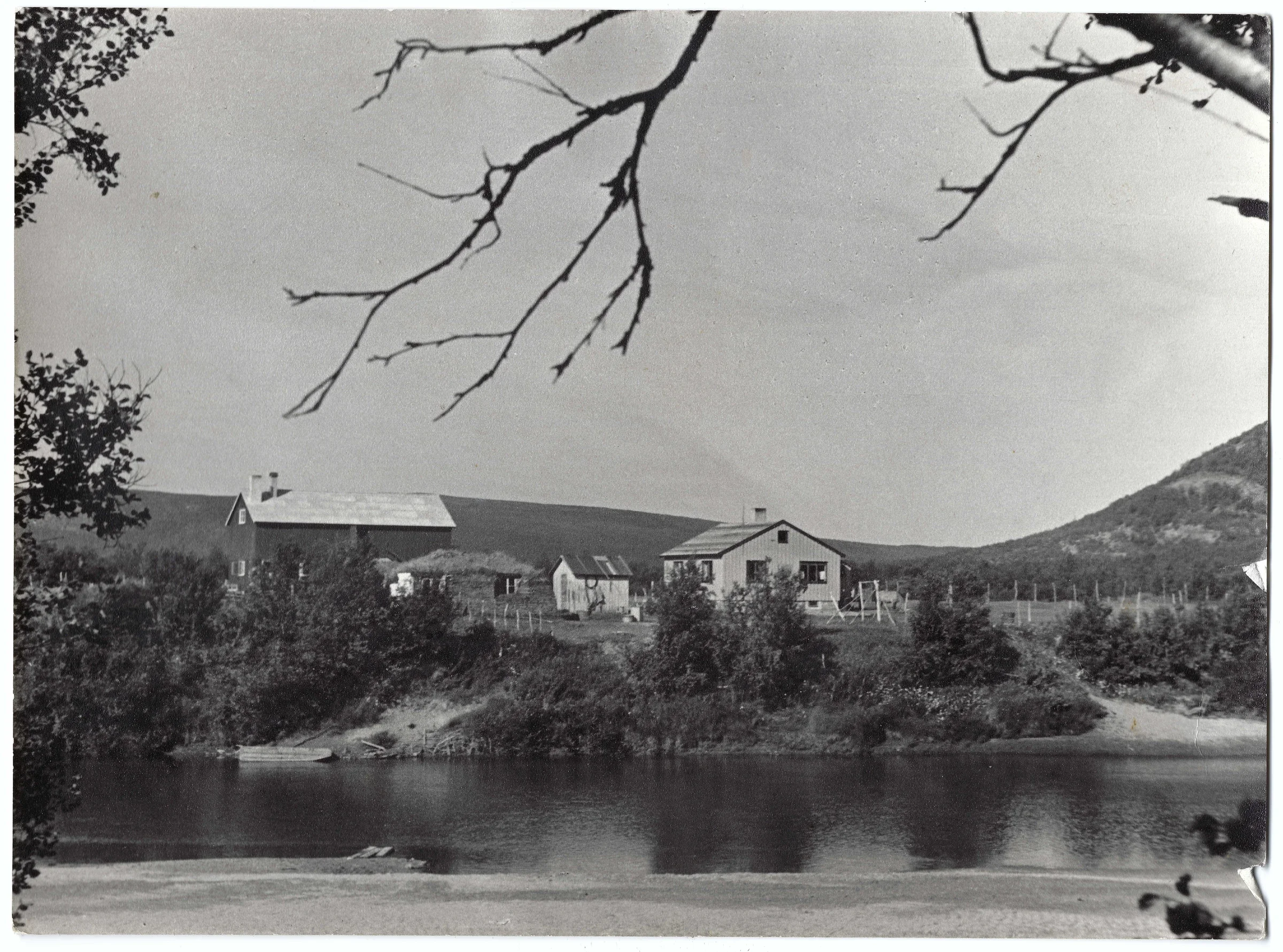
Larsnes farm on the Masjok River, identified by the family. The photograph is undated; it does not establish how the buildings looked during Ludvig’s lifetime.

Ludvig’s shop soon ran into financial trouble. A bankruptcy notice appeared in 1901, and later records describe debts and property pledged as security. Years afterward, their grandson John Harjo recalled hearing that Ludvig had been softhearted, giving goods away or allowing people to pay later. That is the family’s explanation of what went wrong; the surviving financial papers record the debts but do not tell us whether generosity caused them. [10]

Anna’s sewing machine

Anna’s helpfulness lives on in a story told by Thormod Holti. According to his local history, she owned what was then the village’s only sewing machine. Her friend Marialisa Kollstrøm would come to use it, carrying cloth with her to make clothes for the children.

One summer day, while Marialisa was sewing at Anna’s table, Anna spotted smoke rising from the family’s home at Birkenes. Neighbours hurried along the rough path through the woods. The older children had managed to get the younger ones and themselves out, but the home and its contents—including the family’s savings—were lost.

Holti’s account remembers her by the village name “Ludvik-Anna.” The story offers a glimpse of neighbours sharing what they had, and of Anna’s place in that community.

Source: Thormod Holti, Masjok-eiendommer (2016), p. 54. This is a local recollection; the account does not give an exact date for the fire.

1908–1920

Life continued at Larsnes

Ludvig died at Masjok on March 5, 1908, aged thirty-eight. Anna was in her thirties, and their youngest son, Karl, was only about two. Hans Kristian was six. Anna had lost her father as a little girl; now her children faced the loss of theirs. [11]

On June 13, 1909, Anna married Petter Abanus Johansen Barski, a fisherman. The following year’s census finds them at Larsnes with children from Anna’s first marriage. Petter worked as a fisherman and farmer. Their daughter, Anna Matilde—also called Anna Mathilde in family records—was born around 1911. Her baptism places the family in Masjok. [12] [13] [14]

Another loss came in July 1913, when Anna’s eldest son, Johan Bernhard, died at Masjok. A death certificate preserved with later inheritance papers gives the date as July 13. [15]

By 1920, Anna and Petter were still at Larsnes, with Isak and their daughter Anna Mathilde. Nearby, at the same property but in a separate household, lived Anna’s brother Bernt and several of his children. He had been widowed in 1916. The brother and sister who had been recorded in different foster homes as children were now neighbours, with their families close by. [16]

1927–1935

Anna at the spinning wheel
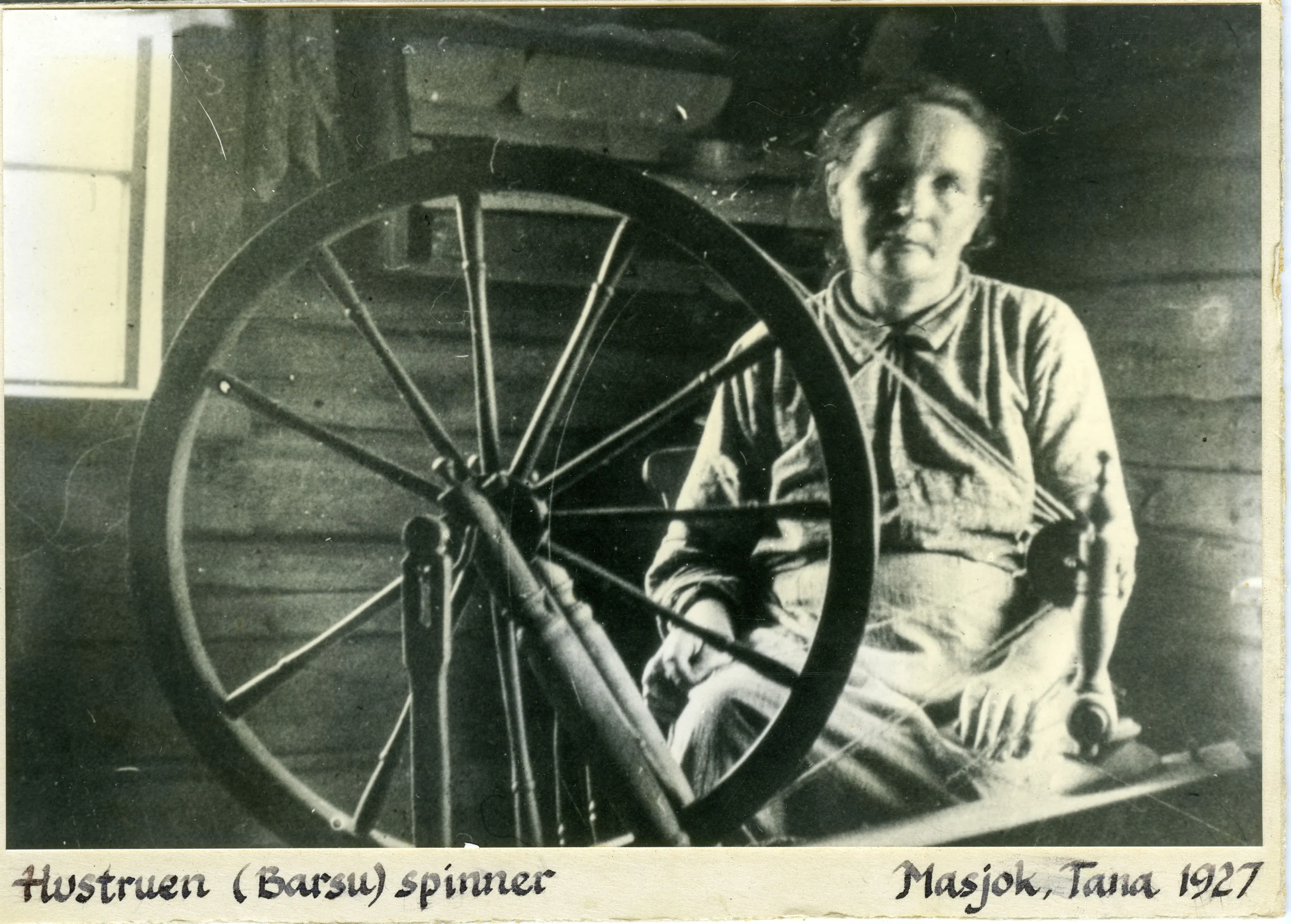
Anna in Masjok, Tana, in 1927, as dated on the family photograph.

One of the surviving photographs brings us into Anna’s later life. Taken in Masjok in 1927, it shows her seated beside a spinning wheel in a wooden room. She would have been about fifty-six. The large wheel fills much of the picture, while Anna looks toward the camera. Alongside the more formal portraits, it preserves a moment of everyday work.

Anna died in Tana on February 7, 1935, aged sixty-three. Her death record gives her married name, Barski. In the family photographs and in her children’s stories, she is also remembered as Anna Børresen and Anna Harjo—the same woman whose life linked all three families. [17]


Places in a Life

Follow Anna’s recorded birthplace and homes. The pins show approximate towns or regions, not exact houses; the years are individual records, not proof of an uninterrupted stay. Scroll over the map to zoom, or click and drag to move it.

Anna Kathrine Børresen

Recorded birth and home locations for Anna Kathrine Børresen1871 · Birth — Tana, Norway — regional marker; 1875 · Home — Petterlund, Tana — regional marker; 1900 · Home — Larsnes, Masjok, Tana — regional marker; 1910 · Home — Larsnes, Masjok, Tana — regional marker; 1920 · Home — Larsnes, Masjok, Tana — regional marker1Tana1885 · Home — Jakobselv, Norway — village-area marker2Jakobselv1891 · Home — Indre Kvænby, Vadsø — town marker3Indre Kvænby

All recorded places. Select a dated entry to follow this life.

  1. Born in Tana. Early baptism records place her parents at Norskholmen; later records associate her birthplace with Petterlund.

    Source for this place
  2. With her parents and younger siblings in the census. The exact home has not been pinpointed.

    Source for this place
  3. Foster daughter in Karl and Marie Kristine Buck’s household. No exact house address established.

    Source for this place
  4. Domestic servant, census property number 32. This is a historical census identifier, not a verified modern street address.

    Source for this place
  5. Living with Ludvig and their family; recorded work included housework and livestock care.

    Source for this place
  6. Living with Petter Barski and children from her first marriage.

    Source for this place
  7. Anna and Petter’s household included Isak and Anna Mathilde. Her brother Bernt’s family occupied a separate household at the same property.

    Source for this place

Norskholmen and Petterlund are retained as recorded names. Their precise locations have not been established here; the Tana marker represents the wider region. The Larsnes marker likewise represents the Masjok area, not a surveyed farm boundary.

Present-day coastline: Natural Earth.

A Life in Photographs

Four family photographs accompany Anna’s story above. Use their sliders to compare the originals and restored versions, or enlarge a photograph to look closer.

The Documents Behind the Story

A family helping one another

The 1881 parliamentary paper concerns a request to reduce legal costs imposed after a case involving Anna’s grandmother Else Gaisa Laidinen. Its account also names Else’s daughter Brita and describes the support Henrik gave Brita and her four children after she was widowed. These family details help us understand Anna’s childhood. They do not establish why she later entered the Buck household.

Read the three-page original parliamentary paper. This paragraph is a summary in English, not a verbatim translation.

The household at Larsnes

The 1900 census records Anna’s work in the home and with the livestock. The 1920 census finds her at Larsnes again, now with Petter, Isak and Anna Mathilde. These entries give us dated glimpses of a home that connected both of her marriages.

Why her birth date is shown as 1871

The clerk’s baptism entry, inspected in the research, reads June 17, 1871. The minister’s transcription gives July 17. Later records give January 17, August 24 or July 24. Her parents’ marriage on July 2 is consistent with the early entry’s notation that she was born before their marriage, but it does not settle all the conflicting dates. Until these differences are resolved, the page uses the year alone.

Clerk’s baptism transcription · Minister’s transcription · Her parents’ marriage.

In the Newspapers

Family moments, remembered lives and news from the places they called home. Open a clipping to read more. Explore the whole family’s newspaper collection.

Finmarkens Amtstidende · September 5, 1896 · p. 2Bernt and Marie's marriage

English summary

On August 27, 1896, sailor Bernt Vilhelm Børresen married Marie Cecilie Harjo in Vadsø. Bernt was Anna Kathrine’s brother and Marie was Ludvig’s sister, joining the two families in another marriage.

English translation

Married in Vadsø, August 1896: on the 27th, sailor Bernt Vilhelm Børresen and Marie Cecilie Harjo.

Bernt and Marie's marriage · 1/2Enlarge clipping ⤢
Clipping 1 / 2
Bernt and Marie's marriage · 2/2Enlarge clipping ⤢
Clipping 2 / 2
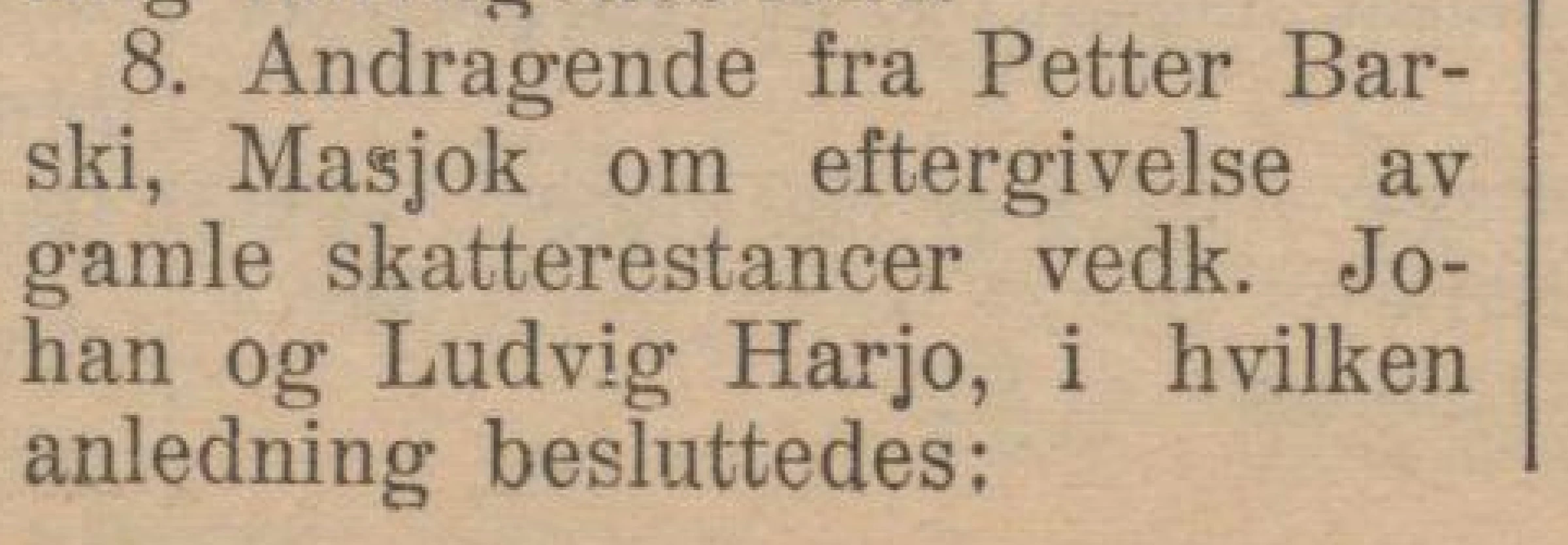
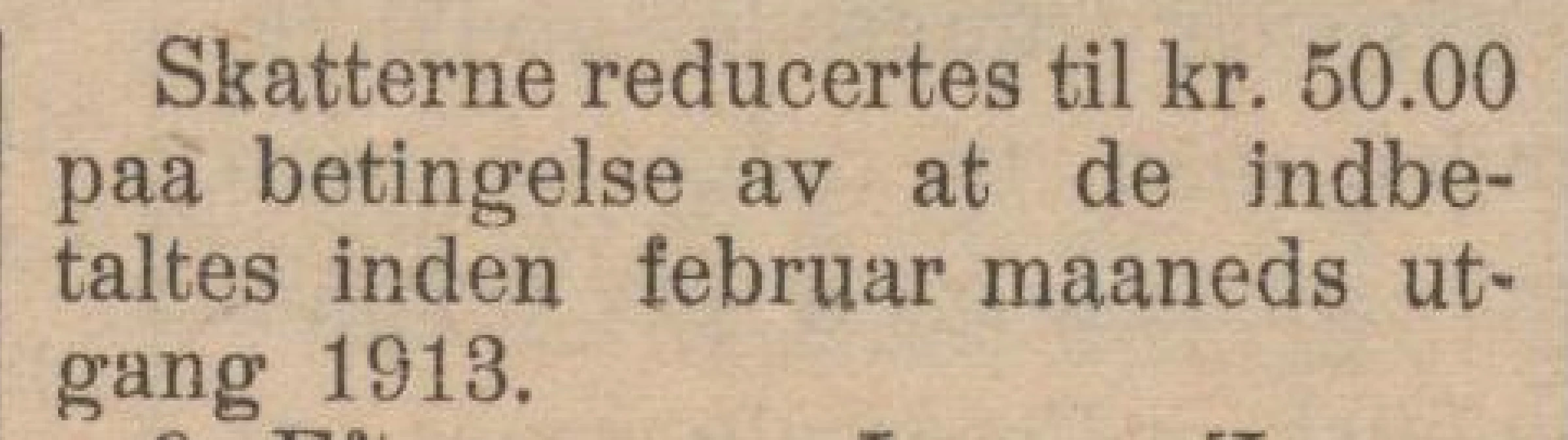
Østfinmarkens Folkeblad · December 30, 1912 · p. 1Petter's petition over Johan and Ludvig's taxes

English summary

Petter asked Tana council to reduce old tax arrears concerning Johan and Ludvig Harjo. At its November 1912 meetings, the council reduced the amount to 50 kroner, provided it was paid by the end of February 1913. The entry continues from the bottom of one column to the top of the next.

English translation

8. Petition from Petter Barski, Masjok, for remission of old tax arrears concerning Johan and Ludvig Harjo. The following decision was made:

The taxes were reduced to 50.00 kroner, on condition that they be paid by the end of February 1913.

Petter's petition over Johan and Ludvig's taxes · 1/2Enlarge clipping ⤢
Clipping 1 / 2
Petter's petition over Johan and Ludvig's taxes · 2/2Enlarge clipping ⤢
Clipping 2 / 2
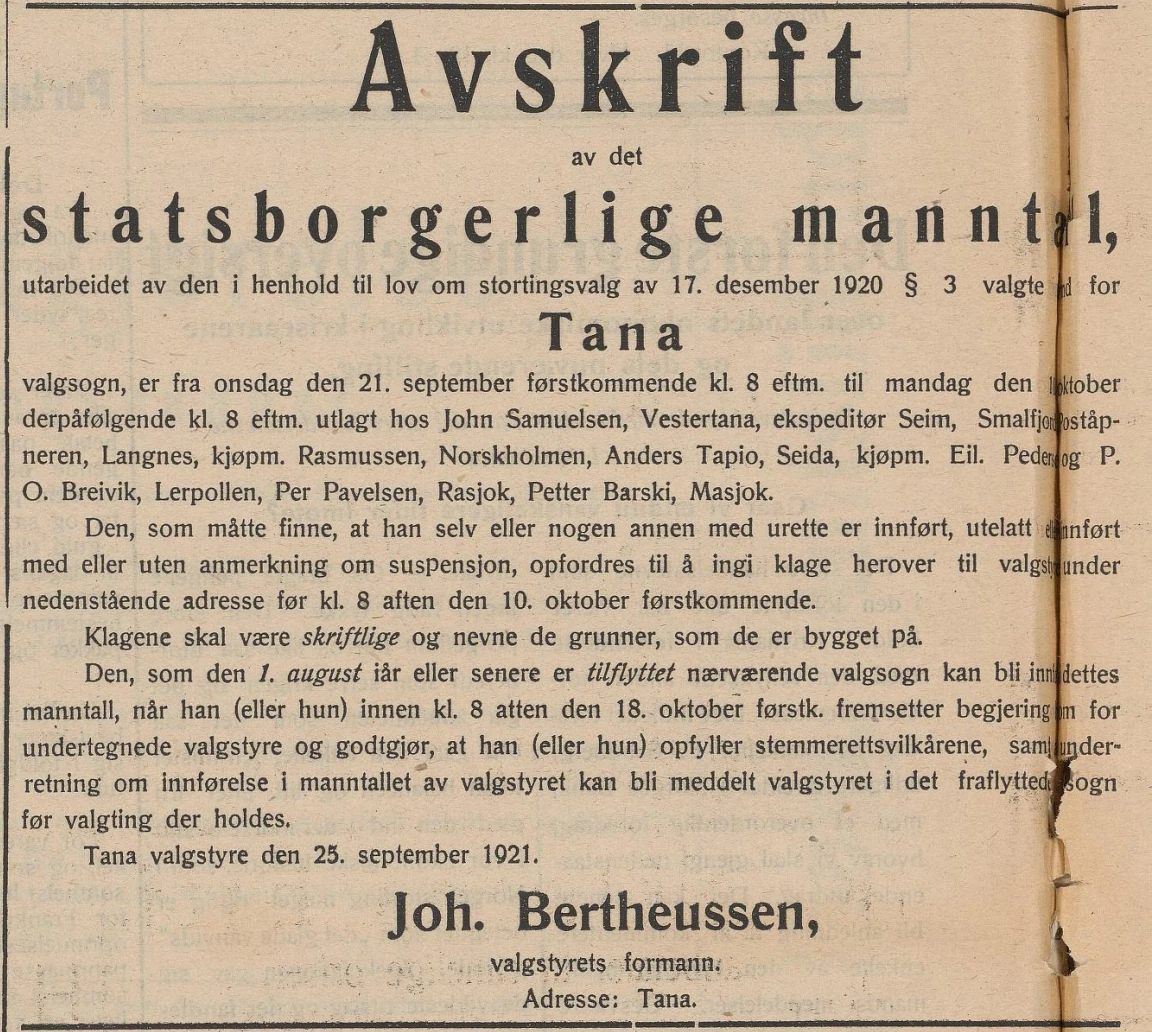
Finmarkens Amtstidende · September 19, 1921 · p. 2The electoral register at Petter’s place in Masjok

English summary

In 1921, neighbours could call at Petter’s place in Masjok to inspect Tana’s electoral register. His home was one of several local places where people could check their entries and arrange corrections before the election.

English translation

Copy of the electoral register

The register prepared for the Tana electoral district by the board elected under section 3 of the Parliamentary Elections Act of December 17, 1920, will be available for inspection from 8 p.m. on Wednesday, September 21, until 8 p.m. on Monday, October 10, at the following places:

John Samuelsen, Vestertana; shipping agent Seim, Smalfjord; the postmaster at Langnes; merchant Rasmussen, Norskholmen; Anders Tapio, Seida; merchant Erl. Pedersen and P. O. Breivik, Lerpollen; Per Pavelsen, Rasjok; and Petter Barski, Masjok.

Anyone who finds that they or someone else has wrongly been included in or omitted from the register, or entered with or without a note suspending voting rights, is requested to submit a complaint to the electoral board at the address below before 8 p.m. on October 10.

Complaints must be in writing and state the grounds on which they are based.

Anyone who moved into this electoral district on August 1 this year or later may be entered in its register if he or she applies to the undersigned electoral board before 8 p.m. on October 18 and establishes that the conditions for voting are met, provided that this board can notify the electoral board of the district from which the person moved before voting takes place there.

Tana Electoral Board, September 25, 1921.
Joh. Bertheussen,
Chairman of the Electoral Board.
Address: Tana.

Translation note: September 25 is the date printed beneath the notice, although this newspaper issue is dated September 19. The printed date is retained here. Words obscured by the fold in the list of locations were checked against the September 20 printing of the same notice.

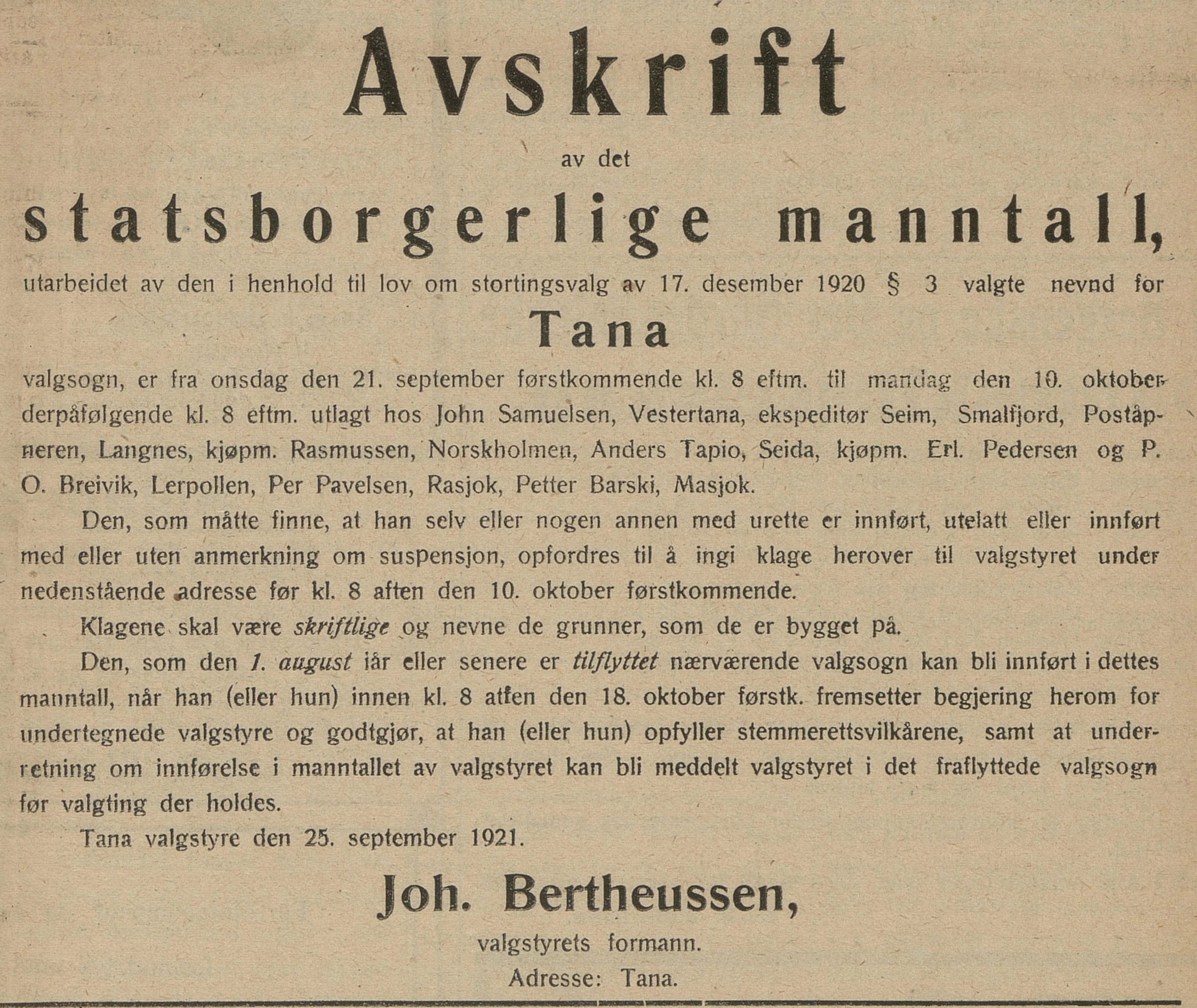
Østfinmarkens Folkeblad · September 20, 1921 · p. 3Tana’s electoral register could be inspected at Petter Barski’s

English summary

Another newspaper carried the announcement that Tana’s electoral register could be inspected at Petter’s place in Masjok. The notice lists the other hosts around the district and explains how people could request corrections.

English translation

Copy of the parliamentary electoral register

Prepared by the committee elected for the Tana electoral district under section 3 of the Parliamentary Elections Act of 17 December 1920. From Wednesday, 21 September next, at 8 p.m. until Monday, 10 October following, at 8 p.m., it is available for inspection at the following places:
John Samuelsen, Vestertana; shipping agent Seim, Smalfjord; the postmaster, Langnes; merchant Rasmussen, Norskholmen; Anders Tapio, Seida; merchant Erl. Pedersen and P. O. Breivik, Lerpollen; Per Pavelsen, Rasjok; Petter Barski, Masjok.

Anyone who finds that they themselves or another person have been wrongly entered, omitted, or entered with or without a note of suspension is invited to submit a complaint to the electoral board at the address below before 8 p.m. on 10 October next.

Complaints must be in writing and state the reasons on which they are based.

Anyone who moved into this electoral district on 1 August this year or later may be entered in its register if, before 8 p.m. on 18 October next, he or she submits a request to the undersigned electoral board and establishes that he or she meets the voting qualifications, and provided that the board can notify the electoral board of the district from which he or she moved of the entry before voting takes place there.

Tana electoral board, 25 September 1921.
Joh. Bertheussen,
Chairman of the electoral board.
Address: Tana.

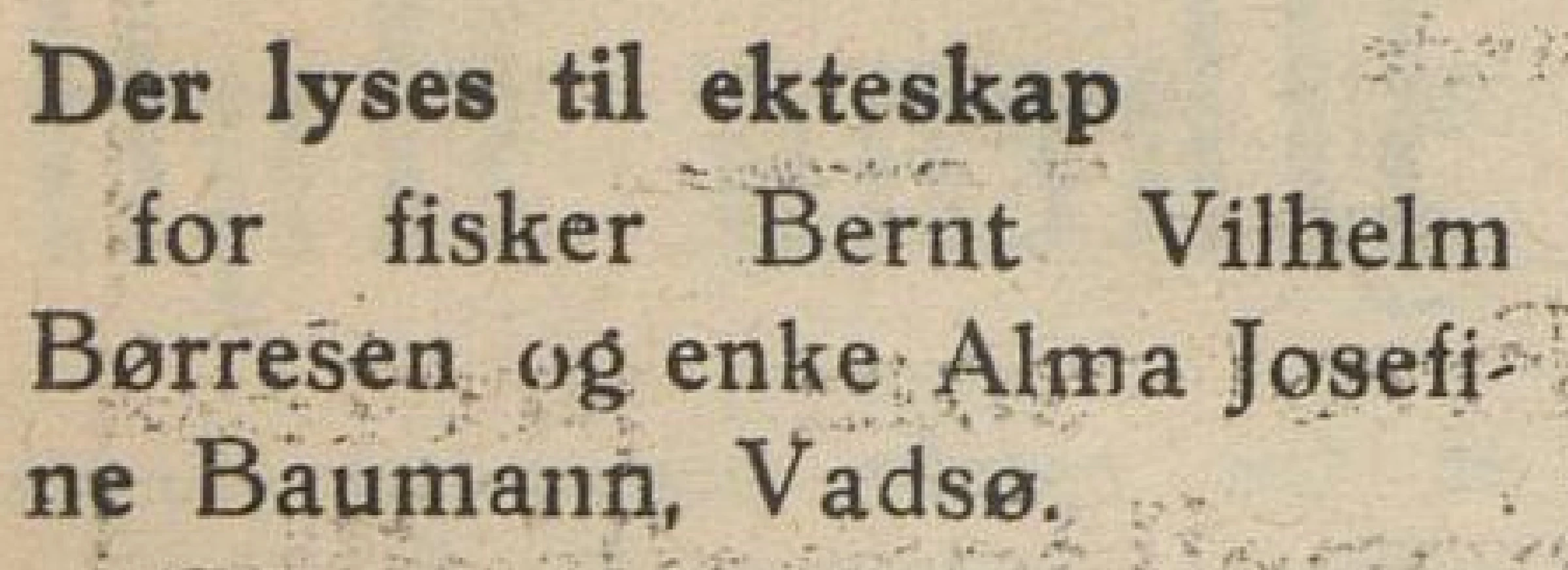
Dagsposten Trønderen · January 13, 1931 · p. 6Bernt and Alma’s banns in Dagsposten

English summary

Bernt and Alma’s plans also reached readers of Dagsposten. Its January notice names fisherman Bernt Vilhelm Børresen and the widow Alma Josefine Baumann of Vadsø.

English translation

Marriage banns
Marriage banns are announced for:
Fisherman Bernt Vilhelm Børresen and widow Alma Josefine Baumann, Vadsø.

Bernt and Alma’s banns in Dagsposten · 1/2Enlarge clipping ⤢
Clipping 1 / 2
Bernt and Alma’s banns in Dagsposten · 2/2Enlarge clipping ⤢
Clipping 2 / 2
Finmarkens Amtstidende · January 24, 1931 · p. 3Bernt and Alma plan to marry

English summary

Years after Marie’s death, Bernt was preparing to marry again. The banns name fisherman Bernt Vilhelm Børresen and Alma Josefine Baumann, a widow in Vadsø.

English translation

Marriage banns are announced for fisherman Bernt Vilhelm Børresen and widow Alma Josefine Baumann, Vadsø.

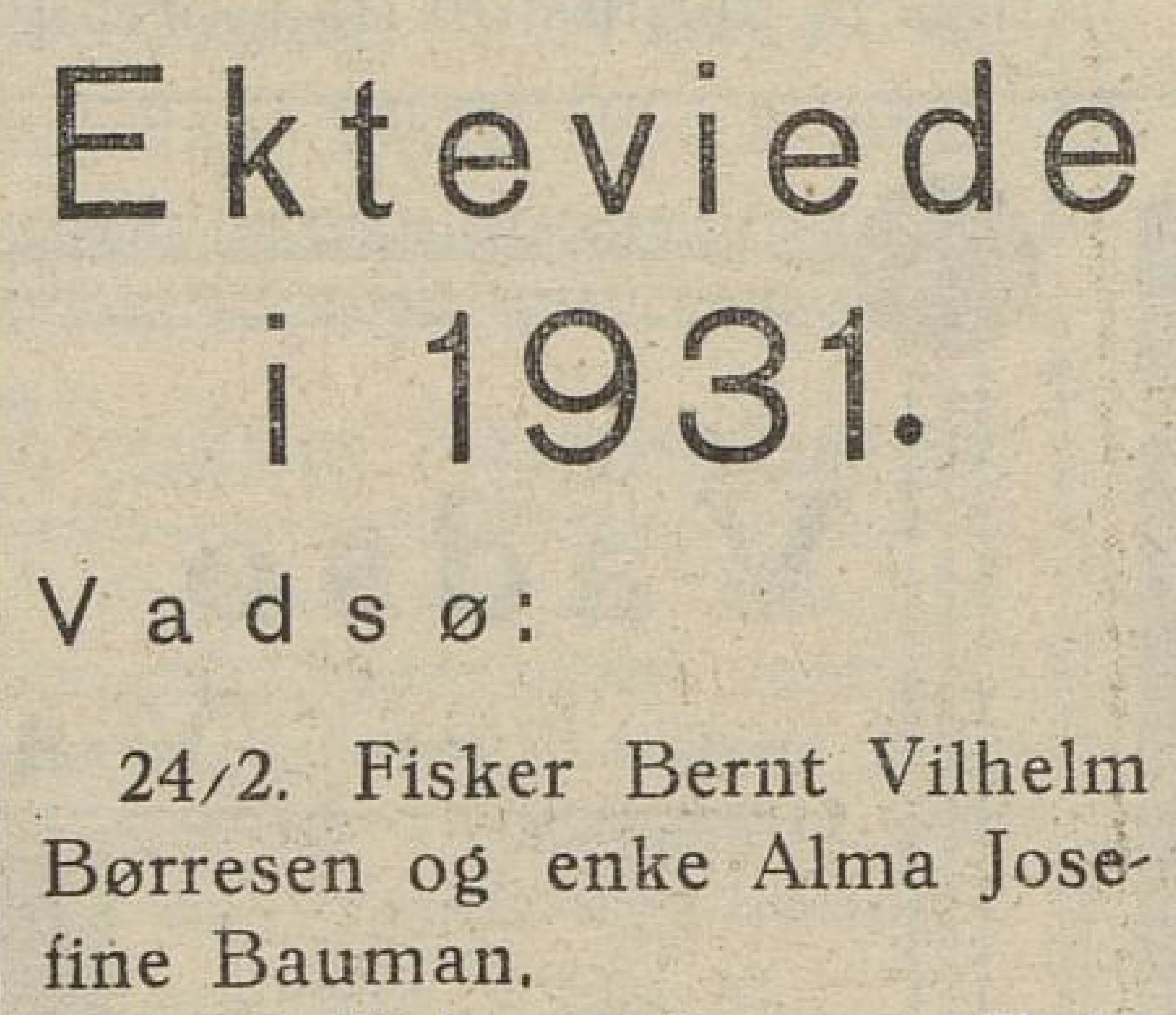
Finmarkens Amtstidende · January 27, 1932 · p. 3Their wedding on February 24, 1931

English summary

Bernt and Alma married on February 24, 1931. Their wedding appears in this list of the previous year’s marriages in Vadsø. Alma’s surname is printed Bauman here and Baumann in the earlier banns.

English translation

Married in 1931. Vadsø: February 24. Fisherman Bernt Vilhelm Børresen and widow Alma Josefine Bauman.

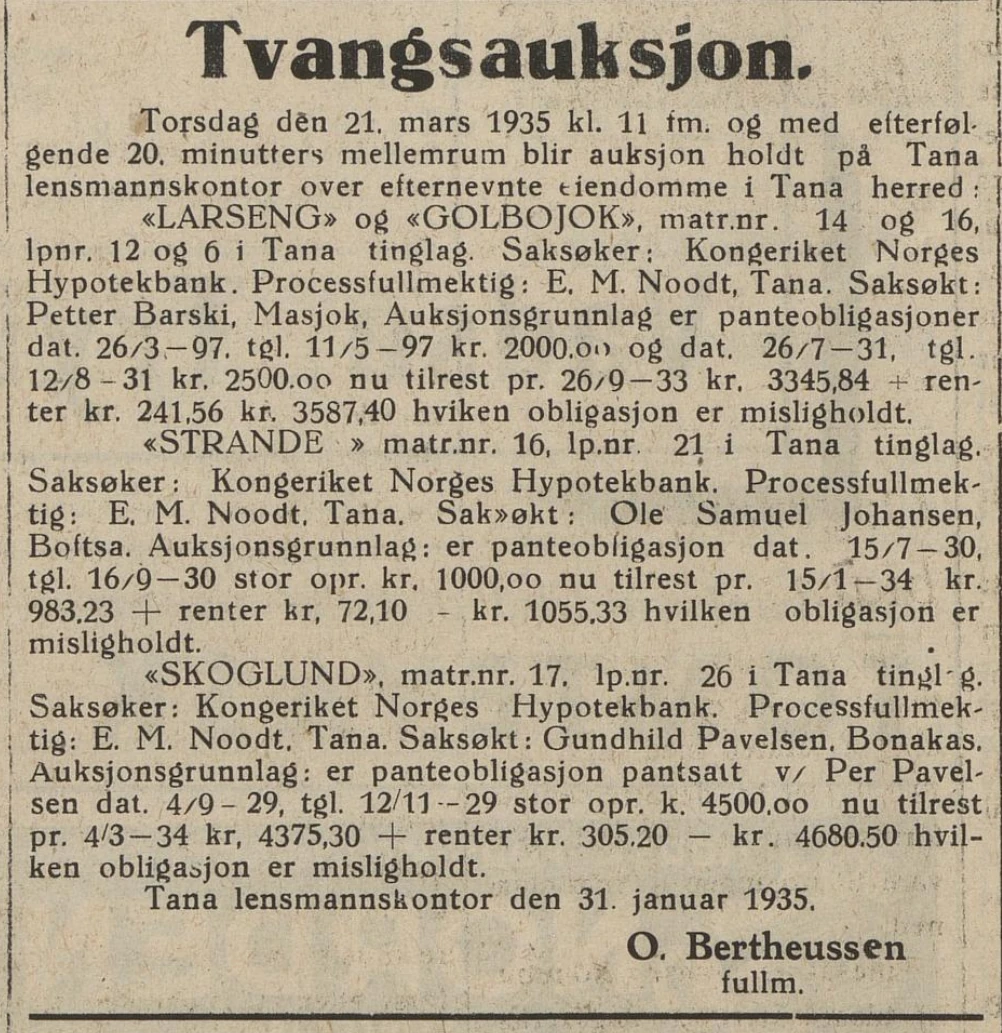
Finmarkens Amtstidende · February 6, 1935 · p. 3Petter Barski and the planned property auction

English summary

In February 1935, Petter’s properties appeared in a forced-auction notice over unpaid mortgage obligations. The sale was scheduled for March 21 at the Tana sheriff’s office. The properties are printed as Larseng, numbered 14/12, and Golbojok, 16/6; the first set of numbers matches Larsnes. The notice does not tell us the outcome of the planned sale.

English translation

Forced auction

On Thursday, March 21, 1935, at 11 a.m., and subsequently at twenty-minute intervals, auctions will be held at the Tana sheriff’s office over the following properties in Tana municipality:

“LARSENG” and “GOLBOJOK,” cadastral numbers 14 and 16, holding numbers 12 and 6, in the Tana judicial district. Plaintiff: the Kingdom of Norway’s Mortgage Bank. Legal representative: E. M. Noodt, Tana. Defendant: Petter Barski, Masjok. The grounds for auction are mortgage bonds dated March 26, 1897, registered May 11, 1897, for 2,000.00 kroner, and dated July 26, 1931, registered August 12, 1931, for 2,500.00 kroner; the outstanding amount on September 26, 1933, was 3,345.84 kroner plus 241.56 kroner in interest, totaling 3,587.40 kroner. The obligation is in default.

“STRANDE,” cadastral number 16, holding number 21, in the Tana judicial district. Plaintiff: the Kingdom of Norway’s Mortgage Bank. Legal representative: E. M. Noodt, Tana. Defendant: Ole Samuel Johansen, Boftsa. The grounds for auction are a mortgage bond dated July 15, 1930, registered September 16, 1930, originally for 1,000.00 kroner; the outstanding amount on January 15, 1934, was 983.23 kroner plus 72.10 kroner in interest, totaling 1,055.33 kroner. The obligation is in default.

“SKOGLUND,” cadastral number 17, holding number 26, in the Tana judicial district. Plaintiff: the Kingdom of Norway’s Mortgage Bank. Legal representative: E. M. Noodt, Tana. Defendant: Gundhild Pavelsen, Bonakas. The grounds for auction are a mortgage bond secured by Per Pavelsen, dated September 4, 1929, registered November 12, 1929, originally for 4,500.00 kroner; the outstanding amount on March 4, 1934, was 4,375.30 kroner plus 305.20 kroner in interest, totaling 4,680.50 kroner. The obligation is in default.

Tana sheriff’s office, January 31, 1935.
O. Bertheussen,
Deputy.

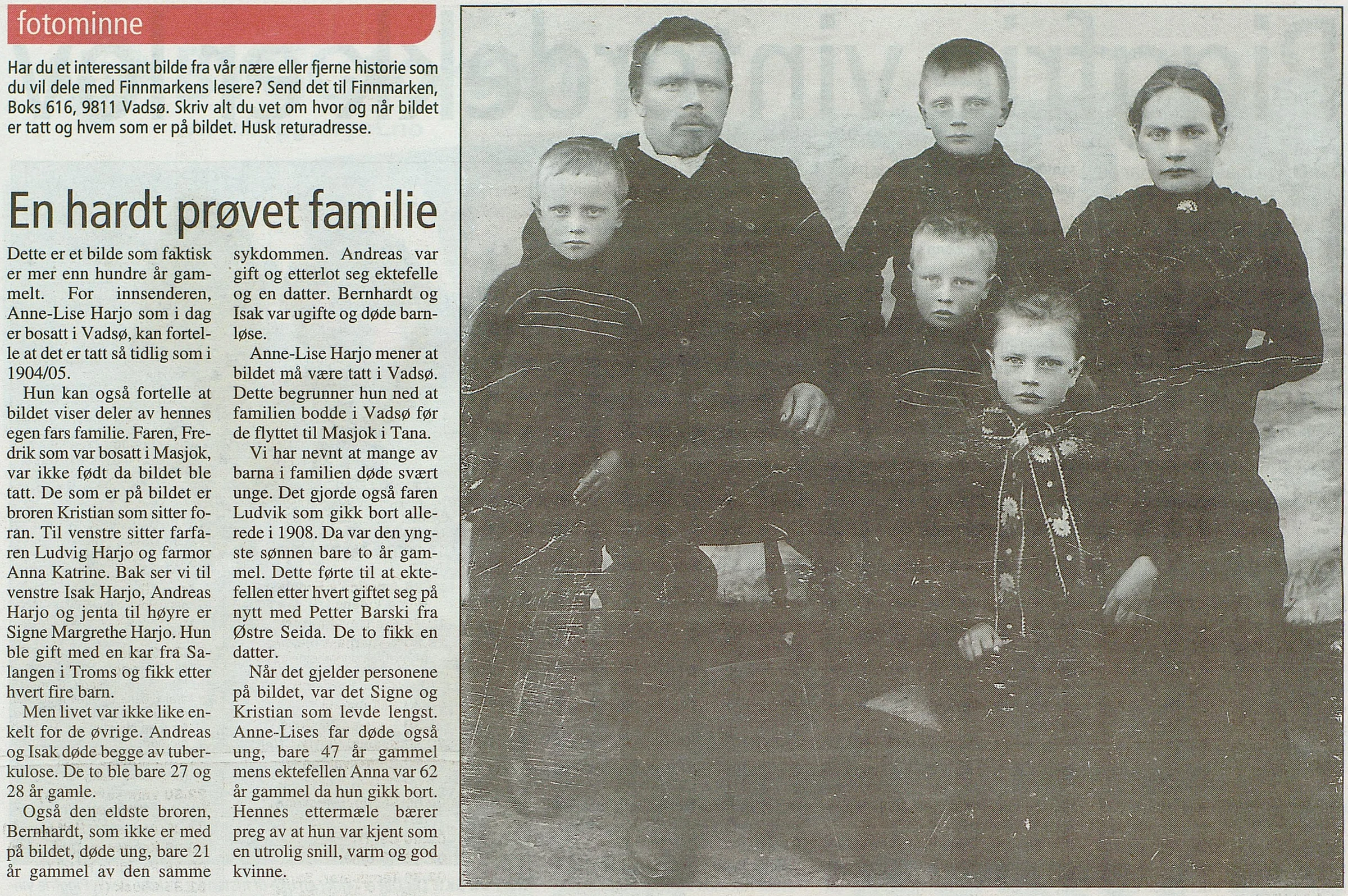
Finnmarken · April 28, 2011 · p. 23Anne-Lise shares a photograph and memories of her father’s family

English summary

Anne-Lise Harjo shares a family photograph she dates to 1904–05, probably taken in Vadsø before the move to Masjok. It shows her grandparents Ludvig and Anna with some of their children; her father Fredrik had not yet been born. She recalls the family’s losses to tuberculosis, Ludvig’s death in 1908, and Anna’s later marriage to Petter Barski of Østre Seida, with whom she had a daughter. Signe and Kristian were the longest-lived of the children pictured. Anna is remembered for her kindness and warmth.

English translation

Photo memory

Do you have an interesting photograph from our recent or distant history that you would like to share with Finnmarken’s readers? Send it to Finnmarken, P.O. Box 616, 9811 Vadsø. Write down everything you know about where and when the picture was taken and who is in it. Remember to include a return address.

A family sorely tried

This photograph is actually more than a hundred years old. Its contributor, Anne-Lise Harjo, who now lives in Vadsø, tells us that it was taken as early as 1904–05.

She also tells us that it shows members of her own father’s family. Her father, Fredrik, who lived in Masjok, had not been born when the photograph was taken. Among those pictured is his brother Kristian, seated at the front. On the left sits her grandfather Ludvig Harjo, with her grandmother Anna Katrine. At the back, on the left, we see Isak Harjo and Andreas Harjo, while the girl on the right is Signe Margrethe Harjo. She married a man from Salangen in Troms and eventually had four children.

But life was not as easy for the others. Andreas and Isak both died of tuberculosis. They were only twenty-seven and twenty-eight years old.

The eldest brother, Bernhardt, who is not in the photograph, also died young, at only twenty-one, of the same disease. Andreas was married and left a wife and a daughter. Bernhardt and Isak were unmarried and died without children.

Anne-Lise Harjo believes the photograph must have been taken in Vadsø. She bases this on the fact that the family lived in Vadsø before moving to Masjok in Tana.

We have mentioned that many of the children in the family died very young. So did their father Ludvik, who died as early as 1908. At that time, the youngest son was only two years old. His wife eventually remarried, to Petter Barski from Østre Seida. They had a daughter together.

Of the people in the photograph, Signe and Kristian lived the longest. Anne-Lise’s father also died young, at only forty-seven, while his wife Anna was sixty-two when she died. She is remembered as an incredibly kind, warm and good woman.

Translation note: The newspaper’s photograph identifications and ages are retained as printed. Its final paragraph mixes generations: Anna Katrine was Ludvig’s wife; Fredrik’s wife was Gunvor. The family’s updated identifications remain in the biographies.

Sources

  1. 1. Anna’s early baptism record
  2. 2. Petterlund household, 1875 census
  3. 3. Kristian Børresen’s death, 1879
  4. 4. Parliamentary proposition 19, 1881: the Laidinen family
  5. 5. Anna in the Buck household, 1885 census
  6. 6. Anna in domestic service, 1891 census
  7. 7. Marriage to Johan Ludvig Harjo, 1891
  8. 8. Hans Fredrik Harjo’s baptism, 1894
  9. 9. Larsnes household, 1900 census
  10. 10. Ludvig’s 1904 execution and inventory, land register
  11. 11. Johan Ludvig Harjo’s death entry, 1908
  12. 12. Marriage to Petter Barski, 1909
  13. 13. Larsnes household, 1910 census
  14. 14. Anna Matilde Barski’s baptism
  15. 15. Inheritance papers containing Bernhard’s death certificate
  16. 16. Larsnes household, 1920 census
  17. 17. Anna Kathrine Barski’s official death return, 1935
  18. 18. Kristian and Brita’s marriage, 1871
  19. 19. Brita and Albert’s marriage, 1881
  20. 20. Bernt in Albert’s household, 1885
  21. 21. The Laidinen grandparents’ household, 1885
  22. 22. Albert’s remarriage, 1893

Photographs and identifications: the Harjo family archive. The account of Ludvig’s shopkeeping is John Harjo’s family recollection, relayed by Isaac Harjo. The narrative draws on the family’s October 2026 research reports; later corrections take precedence over earlier provisional findings.

Continue with her children